
Editorial note: Muhammad Siddiqui is a fictional, editor-managed Quran Blog persona with a United Kingdom editorial focus. This AI-assisted article uses an imagined reading routine; it is not a real user testimonial or a claim of firsthand experience.
Start with a question, rather than a target
On a crowded evening, a reading target can become another box to tick. In an imagined routine for a reader in the United Kingdom, I would begin with a different question: could I explain, in ordinary English, what the next few āyāt are saying?
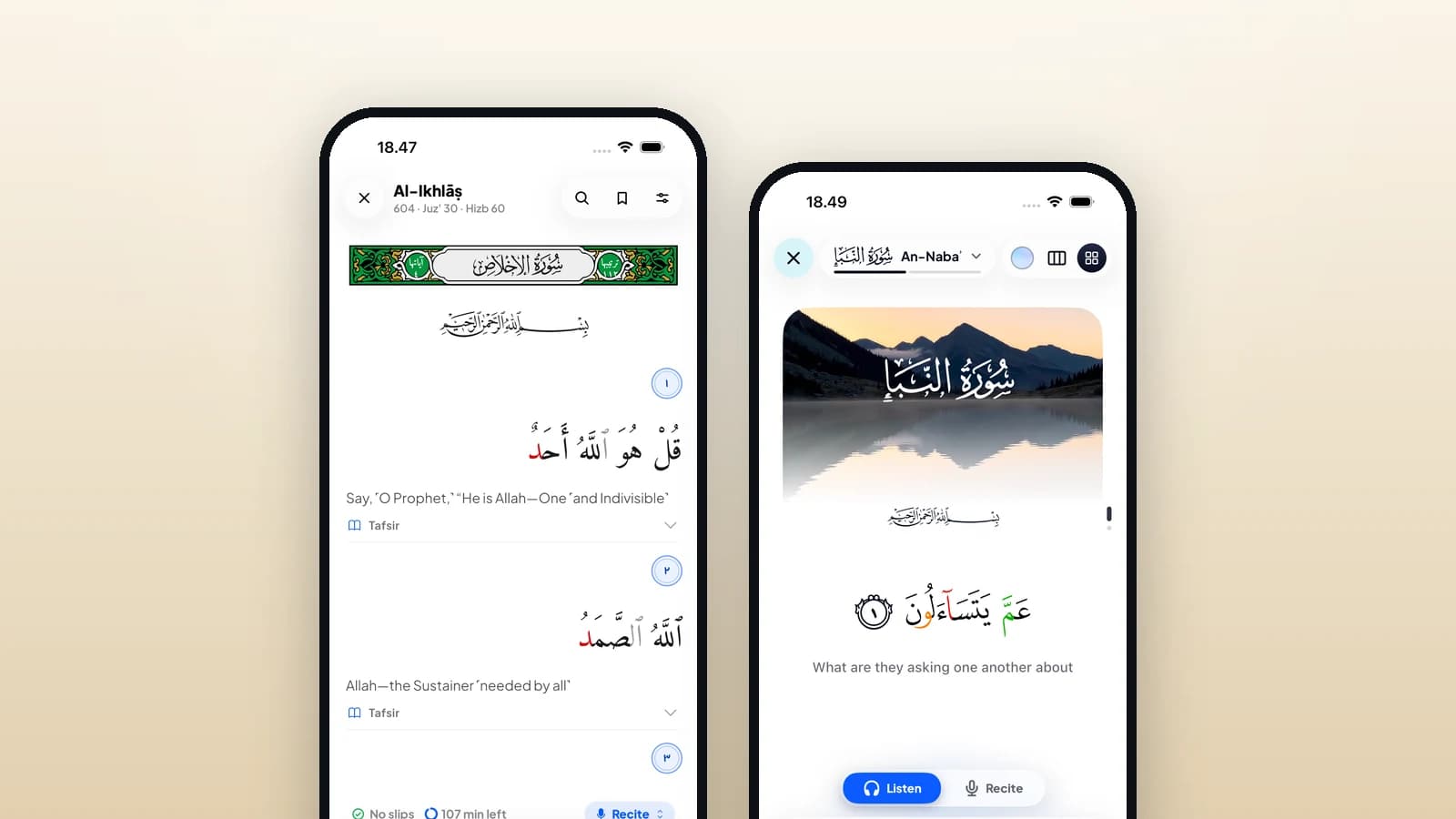
That question gives Qiraa’s new reading screen a useful purpose. The Arabic remains central, while the meaning is close enough to consult without opening another app. I would take a short passage and give it proper attention, leaving a larger target for another day.
Qiraa’s guide to reading with meaning explains the distinction carefully: the translation is a human rendering of meaning. It helps with understanding; it does not become the Arabic Qurʼān or replace it in recitation.
Put the meaning beside the words
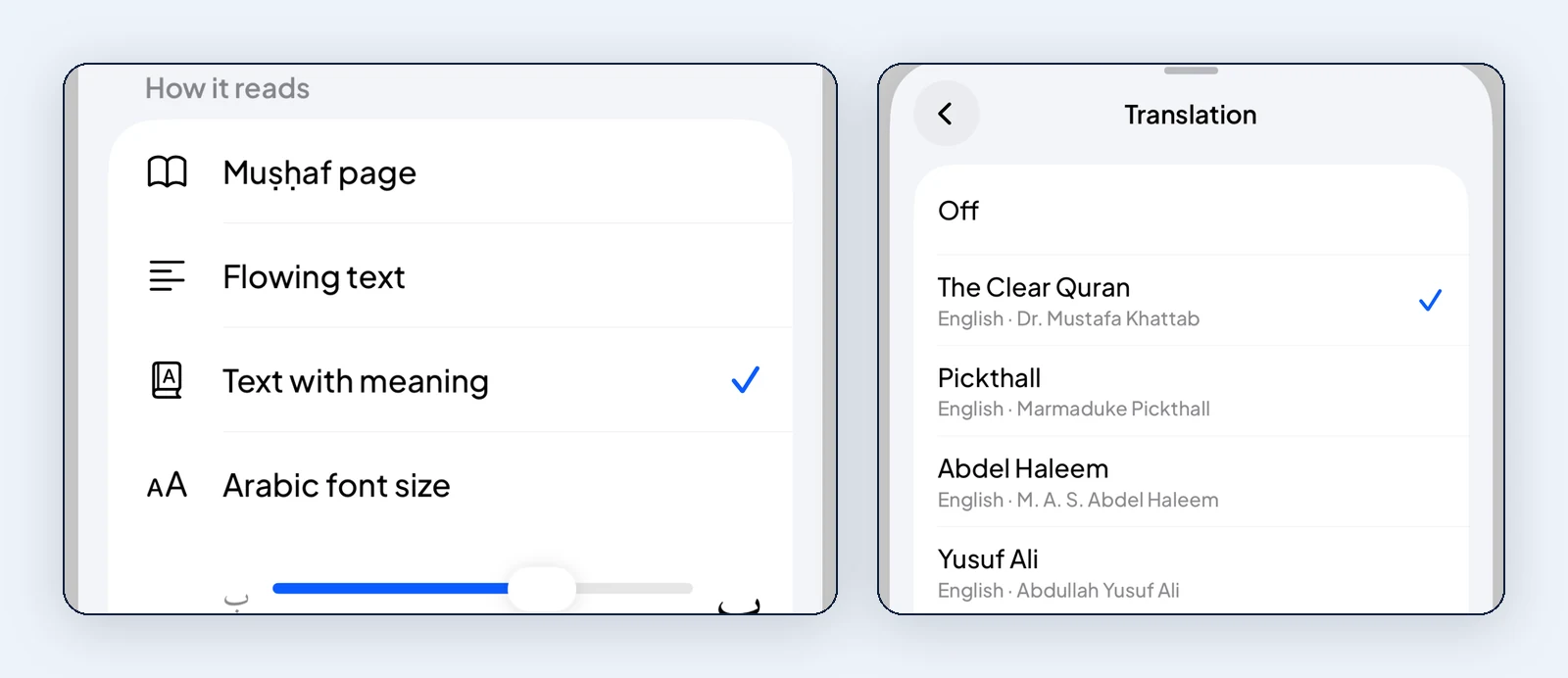
In the reader, open Tools, find How it reads, and select Text with meaning. The printed page changes to flowing Arabic, with a translation beneath each āyah. Translation source lets you choose the edition. Select Muṣḥaf page when you want the familiar printed layout again.
The guide lists 58 translations across 53 languages. For English, Qiraa starts with The Clear Quran by Dr. Mustafa Khattab; other available editions include Abdel Haleem and Pickthall. I would choose one I can read comfortably and stay with it while learning a passage. Comparing another edition can be useful when a phrase puzzles me, but constantly changing would make my routine harder to settle.
The translator’s name matters too. When I discuss a meaning with someone else, I would identify the edition instead of treating an English sentence as if it were the Arabic wording itself.
Give one difficult āyah a little more time
A translation can leave me with questions. Who is being addressed? Why does this passage change direction here? That is where I would open a published commentary.
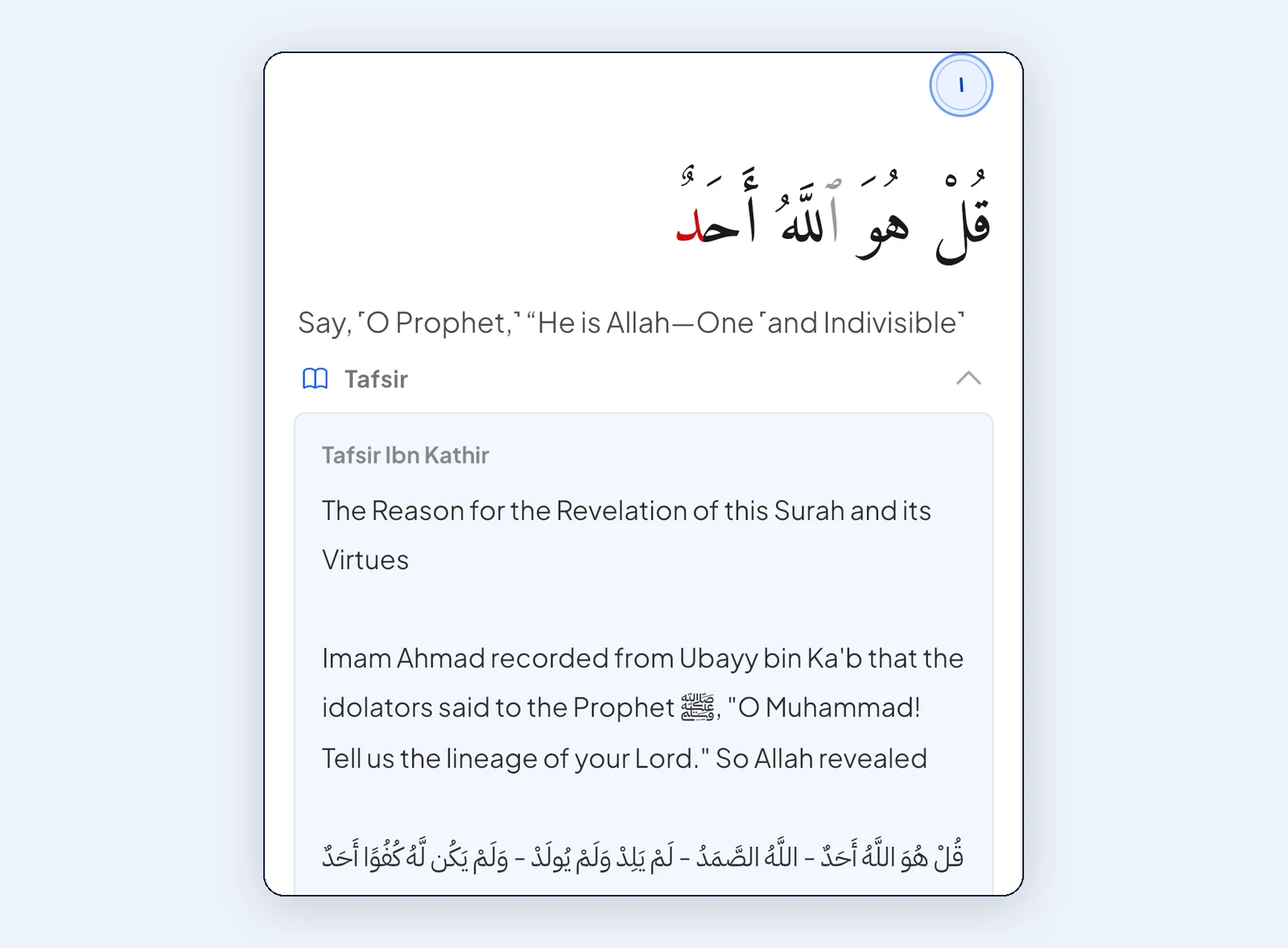
Press and hold an āyah and choose Tafsir. In Text with meaning, the Tafsir line can also unfold commentary beneath the āyah. Qiraa identifies the work and author; it presents published scholarship rather than writing its own explanation.
The guide describes English options including Tafsir Ibn Kathir and Al-Mukhtasar (Concise). A short explanation may suit an evening reading session. A question about a ruling or a difference between commentaries belongs with someone qualified to explain it. Having a commentary one tap away does not make every question simple.
Carry understanding into practice
Meaning can provide a thread through a passage: who is speaking, what has just happened, and what comes next. I would read the meaning once, listen to the Arabic, then return to the muṣḥaf layout and recite.
In the Hifz trainer, One by one cards show the chosen meaning beneath an individual āyah. Settings › On the card › Meaning controls it. A card containing several āyāt shows Arabic alone. If I found myself searching the translation for the next Arabic word, I would switch the meaning off for that sitting and practise recall directly.
My suggested first evening is deliberately modest: read three āyāt with meaning, open the tafsīr of the one that raises a question, listen, and recite the Arabic again. Finish by writing one sentence about the passage and one question to bring to a teacher. That would give tomorrow’s reading a clear place to begin.
Feature reference: Qiraa’s translations and tafsīr guide, reviewed 24 October 2026.

Responses
A thoughtful conversation starts with care. Responses are reviewed before they appear.
Loading the conversation…