To practise starting within a memorized surah, choose a small portion you have already learned and a few suitable ayah boundaries. Begin from a checked cue, recite the agreed next part, and record any help you used. This is a focused exercise in finding a starting point. Keep normal continuous revision as well, and agree appropriate places to begin and end with your teacher when you are uncertain about the passage.
Choose the question before choosing the targets
The question is specific: can you enter the familiar portion at this point without first reciting everything that comes before it? You may find one entry comfortable and another uncertain. Describe the difference without turning it into a judgment about all your hifz. A small set of chosen starts lets you investigate the uncertainty directly. You are checking where the next useful practice should begin, rather than trying to produce a dramatic result from a long test.
Prepare the set while the text is open. Choose three ayah beginnings within the portion, checking both the reference and the surrounding meaning. Give them simple labels such as A, B and C in your private note. Beside each label, write the reference and how much you intend to recite. Keep any cue separate from the target. Do not create a new stopping point by cutting a word or selecting an arbitrary fragment of text.
For the first attempt, ask a partner to choose one of your agreed references and provide the agreed cue. Your partner should have the text available for checking, while your own target remains out of view. If you practise alone, prepare the cue and the answer so that checking one does not expose the other. Settle the arrangement before the attempt begins. Otherwise you may spend the exercise changing the test instead of noticing what happened.
Record what helped the start
After the cue, attempt only the part you agreed. If you need help, record what was given: a repeated cue, an opening word, a longer model or the visible text. These are useful details for the next sitting. Keep them beside the reference rather than trying to remember them later. An assisted completion still tells you where help was needed, but it should not be recorded as the same event as an unaided start.
Follow that start with a separate continuous reading check from your usual beginning, if that is part of the lesson. Name the two tasks in the note. Being able to continue through a passage and being able to enter it from a selected cue are two questions you can examine separately. Neither task should quietly replace the other. If the continuous reading becomes uncertain too, narrow the practice to a smaller portion before adding more starting points.
Roediger and Karpicke’s original retrieval experiment compared recall tests with restudy of prose passages, finding an advantage for prior testing at delayed checks. It did not study Quran memorization or this starting-point exercise. Use the distinction between attempting and checking to organise practice, without assigning yourself a research-backed improvement percentage or assuming that one procedure suits every learner.
Review one short round
- Choose a learned portion and a few suitable ayah boundaries with clear references.
- Agree the cue, target and amount to recite before starting.
- Attempt each selected start, recording any help and the place it was needed.
- Check the text and choose one next action for each uncertain target.
Keep the first round short enough to review immediately. After each start, identify what you will do next with that particular reference. Perhaps you need to prepare the opening again, check an uncertain continuation, or ask your teacher about the place to begin. Do not add another target simply because the first one was uncomfortable. A useful session leaves an actionable note, not a growing collection of unresolved starting points.
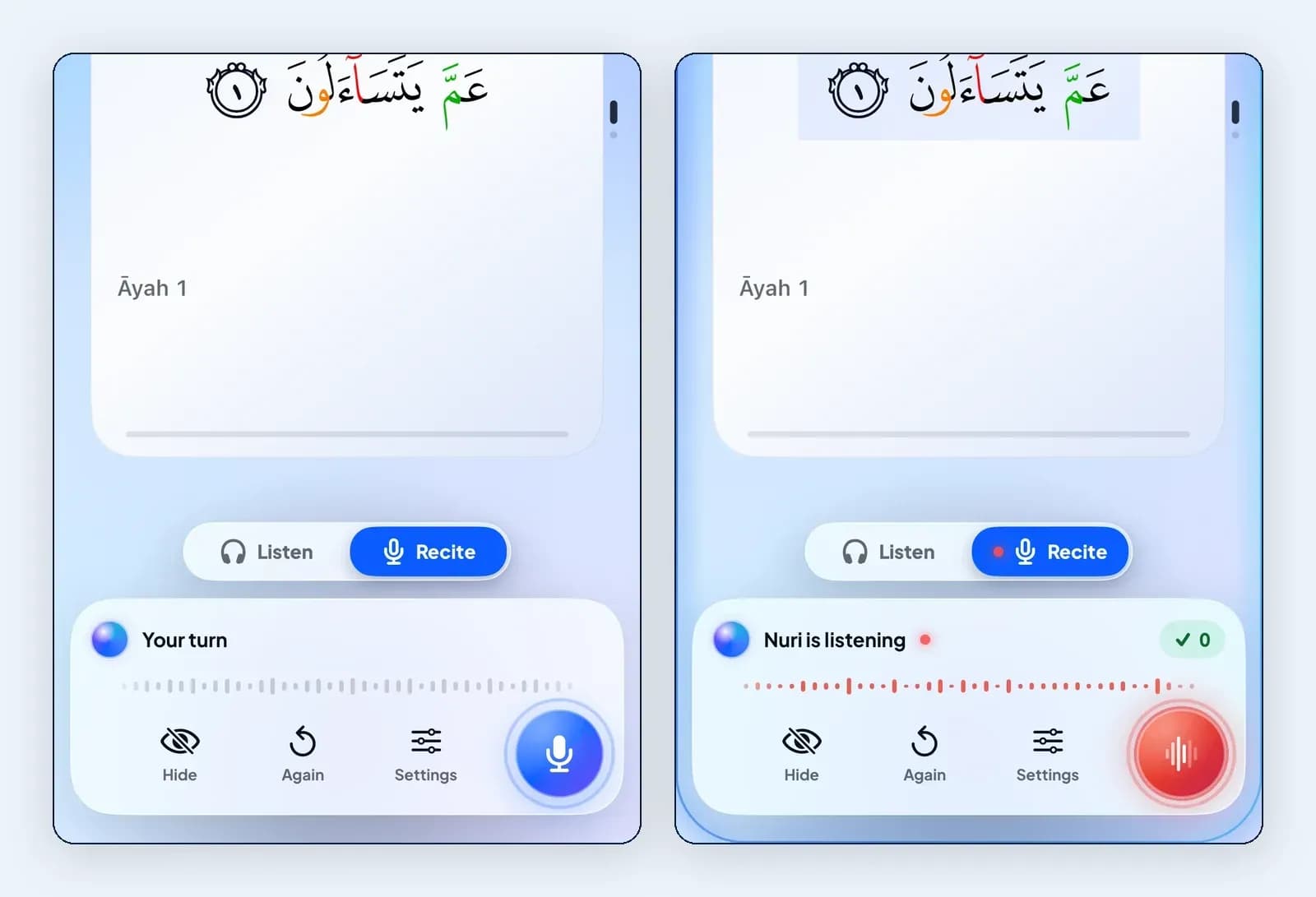
For app-supported practice, Qiraa’s Test me guide describes cards presented out of order, with the preceding ayah as a cue and the target initially hidden. That offers one documented way to work from a cue. Choose the available portion deliberately and read the prompts on your own screen. Our Test me planning guide explains how to turn a completed check into a small next task.
If you use the app, keep your question narrower than the result screen. Which cue did you recognise? Where did you need help? What did you verify afterwards? Write down the passage reference before leaving the session. If an automated result conflicts with the text or with feedback you receive in a lesson, keep the exact example available for review. The practical next step depends on what happened at the target, not just on the colour of a result.
Prepare an uncertain target for another day
Return to one uncertain target with the text open. Prepare the starting words and their continuation using the model your teacher recommends. Then move to a different small task before checking the start again. Keep the later attempt distinct from the immediate assisted retry. This makes the note easier to interpret when you return tomorrow. For the details of that record, use the hifz revision log rather than relying on a general feeling about the session.
On another day, change the order of the same agreed targets before expanding the set. Ask the partner to select the reference without announcing the sequence beforehand. Keep the portion, cue arrangement and amount to recite clear. If one target remains difficult, bring that reference and your help notes to the lesson. You can also check the ayah-transition practice guide when the uncertainty lies in the connection after a successful start.
Keep context and continuous revision together
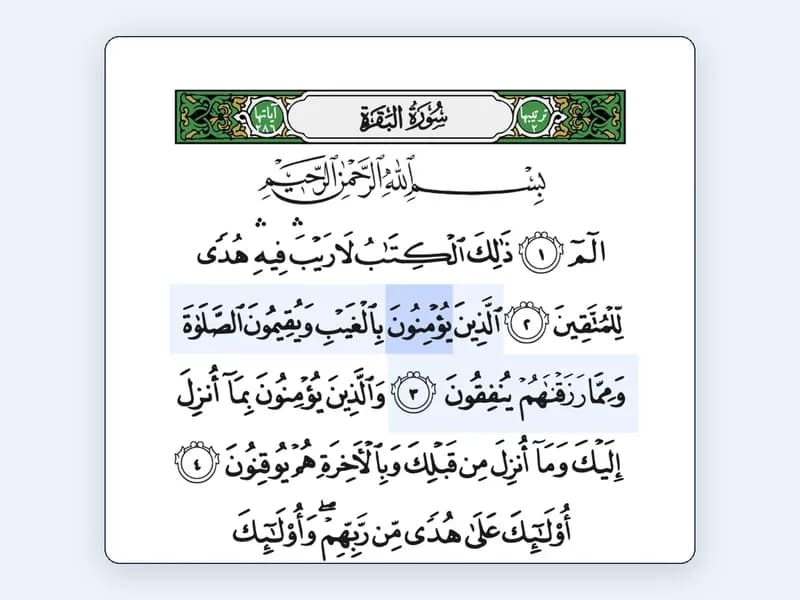
Keep the passage’s context in the exercise. Reopen the surrounding ayahs when preparing or reviewing a start, and ask your teacher where an appropriate beginning and ending belong if you are unsure. A convenience such as a page edge or a card boundary does not settle that question by itself. Limit the exercise to the material you are ready to review. A longer list of references is not automatically a better plan for today’s available attention.
End with a short decision for each target: keep it for another check, prepare it again, or discuss it in the next lesson. Retain the ordinary continuous revision your teacher has assigned. Practising selected starts adds a useful question to that routine: where can I begin, with what cue, and with how much help? When the answer is recorded beside a precise reference, the next sitting can start with a task you can actually carry out.
Responses
A thoughtful conversation starts with care. Responses are reviewed before they appear.
Loading the conversation…