Surah Al-Falaq is chapter 113 with five ayahs; Surah An-Nas is chapter 114 with six. Both open with seeking refuge in Allah, but their wording and movement are distinct. Read Al-Falaq on Qiraa and An-Nas on Qiraa as two complete surahs before combining your notes. Their brevity makes a comparison manageable, while their differences give you something more precise to study than the general label protection.
Follow the five ayahs of Al-Falaq
In Al-Falaq, begin with the one in whom refuge is sought: the Lord of daybreak. Then follow what the remaining ayahs name. The sequence includes evil associated with what is created, darkness when it settles, those who blow on knots, and the envier when he envies. Locate each expression in its own ayah. Keep the list complete rather than allowing the example you recognise most easily to stand for everything the surah says.
Read the relationships within those phrases as carefully as the nouns. An expression such as an envier when he envies draws attention to an action and its occurrence. In a first study, point to the phrase and ask what its wording includes. If a term such as the reference to knots needs explanation, consult an identified commentary. Do not turn an uncertain interpretation into a description of a particular neighbour or an explanation of an event you cannot actually establish.
Follow the six ayahs of An-Nas
An-Nas begins differently. Its first three ayahs name Allah in relation to people as Lord, King and God. Follow the repeated reference to people through those lines before moving to what refuge is sought from. Reading the opening as three linked ayahs lets you hear its arrangement. A summary that merely calls it another short prayer misses something a reader can observe directly: the successive descriptions and the repeated word that gives the surah its name.
The remaining ayahs concern the whisperer who withdraws, the whispering in people’s hearts, and the closing reference to jinn and people. Follow the complete An-Nas reading page through the final ayah. Avoid ending your account at a single unfamiliar word. In your map, distinguish the opening descriptions of Allah from the later description of what refuge is sought from. The two parts belong together, but they do different work in the reading.
Keep shared practice and distinct texts clear
The two surahs are often discussed together as Al-Mu‘awwidhatayn, the pair of refuge-seeking surahs. Sahih Muslim 814a records the Prophet’s praise of the verses beginning these two surahs. Keep the reference close when discussing their virtue. A brief narration should not be expanded into an invented promise about a specific illness, a personal accusation or a guaranteed outcome. A sourced account of a practice and a claim added to it are different things to investigate.
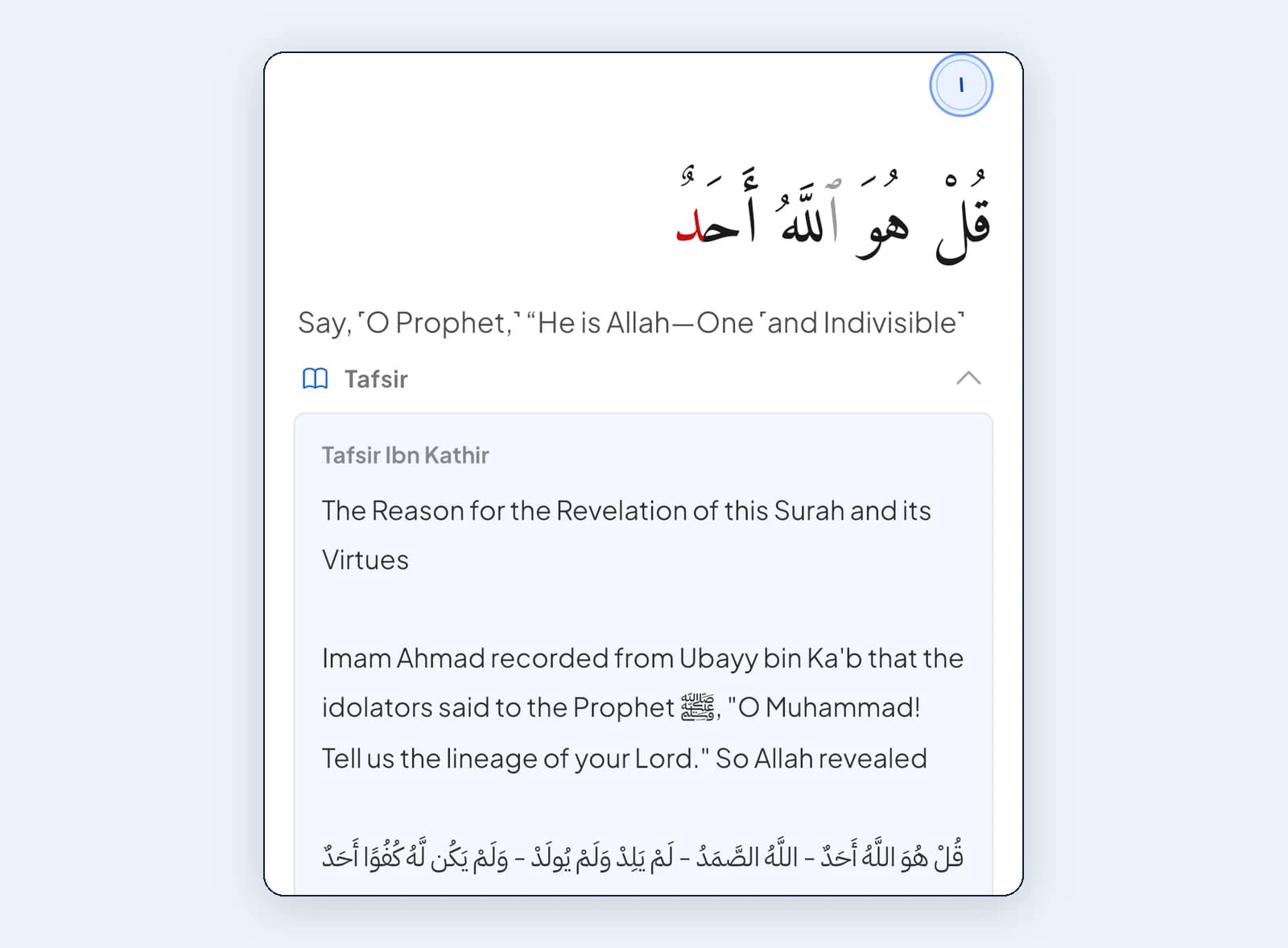
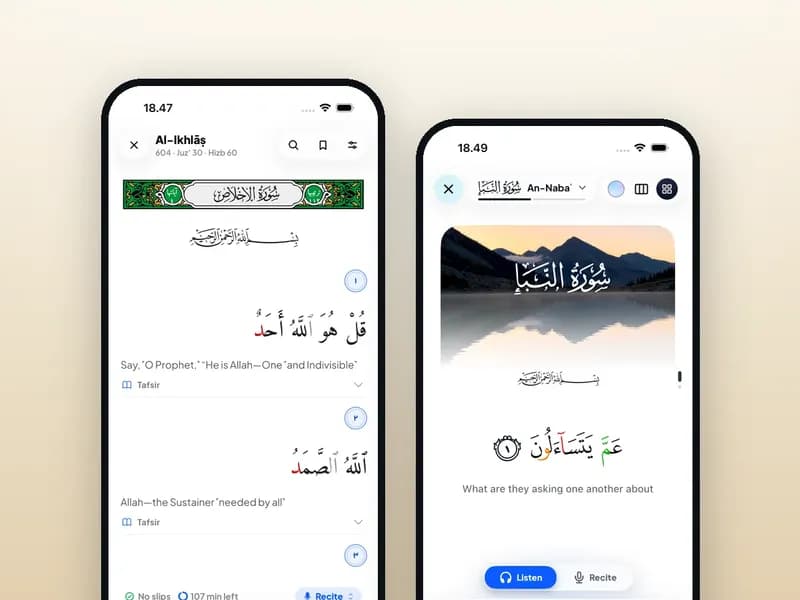
Readers may also ask where Al-Ikhlas belongs. Sahih al-Bukhari 5017 describes a bedtime practice that includes Al-Ikhlas, Al-Falaq and An-Nas. That explains why the three are often encountered together, without making them one surah or giving them identical content. You can open Al-Ikhlas on Qiraa separately. When noting a reported practice, preserve the named surahs and consult the complete report for its details rather than assembling a new routine from disconnected summaries.
- Al-Falaq 113:1 — identify the opening request and the Lord of daybreak.
- Al-Falaq 113:2–5 — locate each named form of evil.
- An-Nas 114:1–3 — follow the repeated reference to people.
- An-Nas 114:4–6 — read the whisperer’s description through the final ayah.
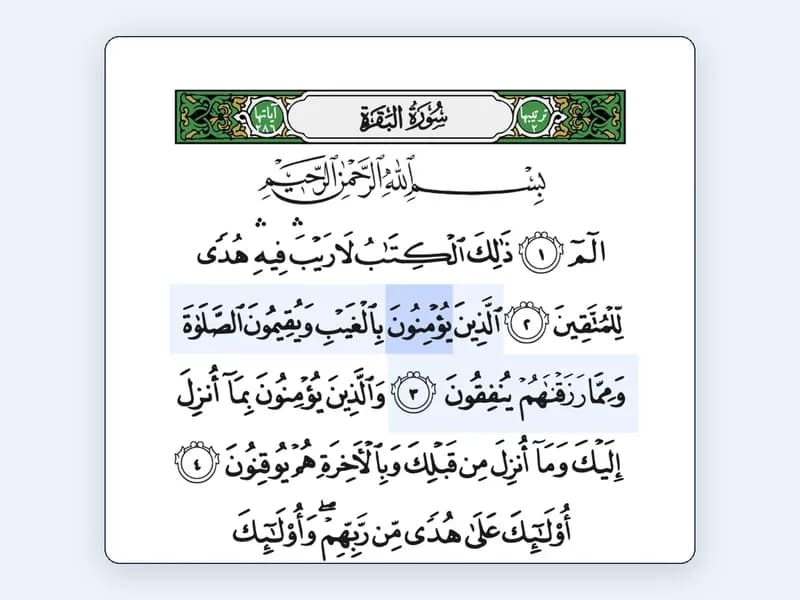
Use the comparison map below with both Arabic pages open. Read one surah from beginning to end, describe its movement, then do the same for the other. Only after those separate readings should you compare the openings and endings. If a group member remembers a line from the other surah while summarising, return to the actual reference. This gives the comparison a clear basis and keeps familiar recitation from quietly merging the passages in your study notes.
Prepare meaning-focused study or memorization
For memorization, identify the distinct opening and final ayah of each surah before testing a complete recitation. Keep any attempt from memory separate from reading the visible page. A learner can know the subject of a surah while still needing help with a continuation. Record that help beside the exact reference. Our guide to practising selected starting points can help you prepare a small recall task with appropriate boundaries and a checked model.
For meaning-focused study, record the question you actually have: the function of a repeated expression, the explanation of a term, or how a commentator understands a particular ayah. Keep your own reflection separate from that explanation. A simple question such as what did I omit when summarising the opening can be useful without pretending to be a complete tafsir. Our reflection and tafsir guide offers a way to preserve that distinction during a shared discussion.
Read together and preserve each surah
In a reading circle, divide the work by text rather than by people’s private fears. One reader can follow the named forms of evil in Al-Falaq; another can follow the opening descriptions and the later account of whispering in An-Nas. Ask each to point to the relevant ayahs. This keeps the conversation anchored in the passage and lets people take part without supplying a personal story or making judgments about someone else’s unseen circumstances.
End by reopening both surahs from their titles. Can you identify which has five ayahs, which has six, and how each moves from its opening to its ending? Keep one unresolved term or connection for your next reading. A careful comparison respects both their shared act of seeking refuge and the particular words of each. That gives you a clearer return to Al-Falaq and An-Nas than treating them as interchangeable names for a passage you have never read separately.
Responses
A thoughtful conversation starts with care. Responses are reviewed before they appear.
Loading the conversation…