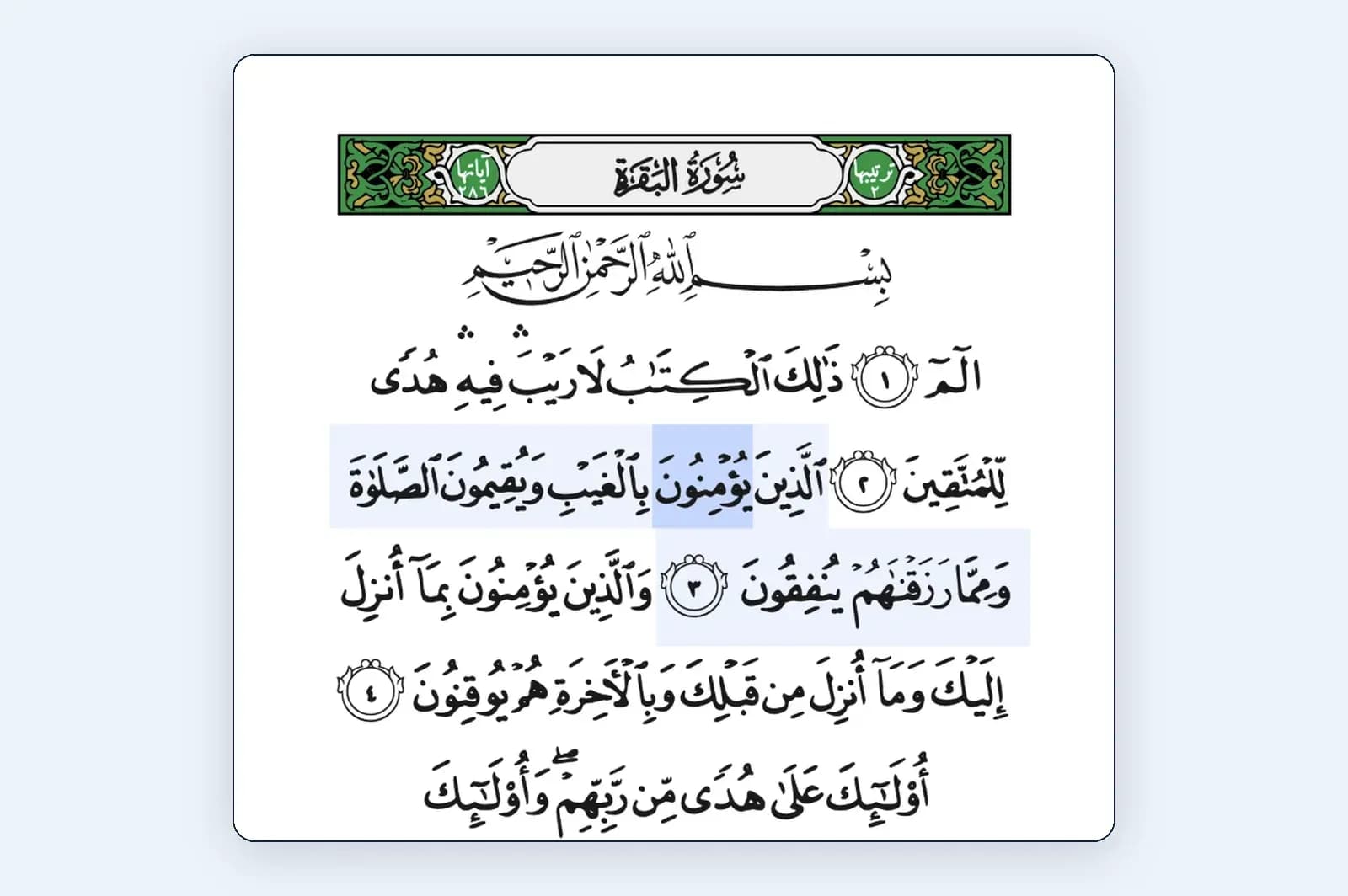
If you are beginning tajweed, start by finding out what your reading needs next. Can you recognise the letters and vowel marks, read connected words, and follow a short passage without guessing? Then work with a trained Quran teacher on one clear sound or pattern, hear a model, try it yourself, and receive a correction. A long list of rule names can wait until each name has something audible and recognisable to attach to. The useful first goal is a small improvement you understand and can practise again.
Connect the rule to the sound
Tajweed concerns how the Quran is recited, including letter articulation, letter qualities, and rules applied in connected reading. In its introductory course, Ribat includes articulation and letter attributes alongside teacher-led practice. Those are connected parts of learning: recognising a written pattern, hearing its pronunciation, and producing it in your own recitation. Knowing a definition does not yet show how you pronounce it, so leave room for someone to listen to you.
Ask a teacher to hear a short, manageable sample before choosing a course level. Be honest about what is difficult: finding the next letter, reading a vowel mark, joining a word, or making a sound you can hear but cannot reproduce. These are useful starting points rather than reasons to feel behind. Cambridge Central Mosque's adult recitation course, for example, begins from basic reading ability and combines theory with small-group practice. Check your own course's starting requirements instead of assuming that every beginners' class begins at the alphabet.
Give reading foundations their own attention
If decoding the script takes most of your attention, give that foundation its own task. Choose a short line with your teacher and point to each letter and mark as you read. Notice exactly where you start guessing. Is the difficulty a joining shape, a dot, or a vowel sign? Record the specific uncertainty and practise that distinction before making the passage longer. Our guide to why Arabic letters change shape can help you describe the reading problem you want to ask about.
For pronunciation work, request a model of the particular sound in a word, then a chance to repeat it. Ask what you should change in a way you can act on: where the sound is formed, what your tongue or lips are doing, or what quality you should hear. Let the teacher choose the appropriate explanation and check your next attempt. Written descriptions and mouth diagrams can support that conversation, but you still need to establish whether the sound you actually made matches the intended correction.
Listen for one feature, then recite
Choose one listening target for a short practice. You might be listening for the letter your teacher corrected or for the difference between a short vowel and the length they demonstrated. Hear the same phrase several times with the Arabic in front of you. Then stop playback and recite it yourself. If you play the recording continuously while speaking, it can be difficult to hear your own attempt. Save any uncertainty as a question attached to the exact word and reference, rather than deciding that a similar overall melody proves accuracy.
When your teacher introduces a rule, ask to see it in an actual phrase. Identify what makes that example relevant, hear it, and explain the instruction back in plain language. Then try another example they select. This turns a rule name into something you can notice and apply. You do not have to collect every exception in the same sitting. If two patterns become confused, write the two examples side by side and ask what distinguishes them before adding another term to your notes.
Use the marks with an audible example
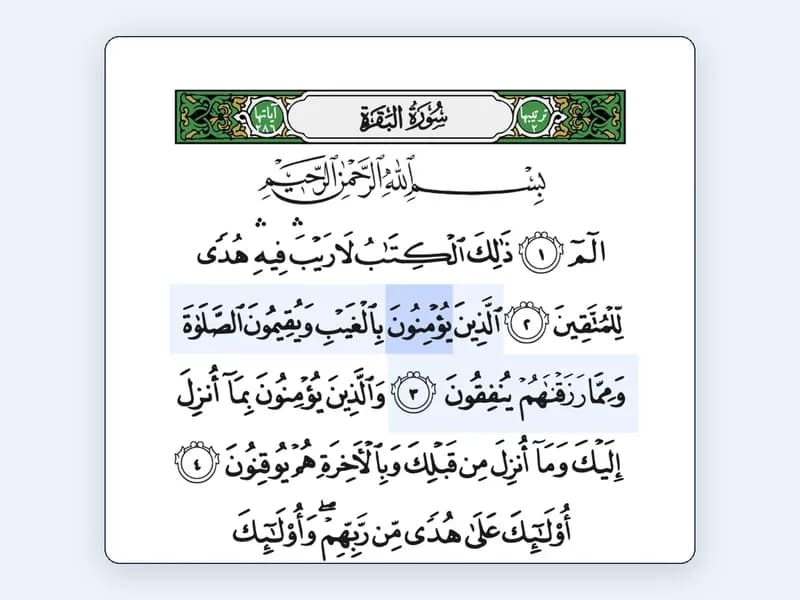
Keep written marks and spoken instruction connected. Colour coding can draw your eye to a feature, but first check the legend in your own edition or app. Do not assume that a colour has the same meaning everywhere or that identifying it tells you exactly how to pronounce the passage. Ask your teacher to connect the sign to an audible example. For two common written signs, the shaddah and sukun introduction provides a separate recognition exercise you can bring to a lesson.
After working on a word or phrase, return it to a short stretch of connected reading. Can you keep the correction when you arrive from the preceding words, rather than starting directly on it? Read slowly enough to pay attention without pulling each word out of the passage. Ask where you should pause and how to resume in the sample you are using. Your teacher can show that in context; a page full of unexplained pause symbols is a poor substitute for hearing one stopping and restarting example clearly.
Keep a small practice card
Between lessons, make a practice card with the passage reference, one target, the model you were asked to use, and the teacher's instruction in your own words. A brief session can begin with listening, continue with a few attentive attempts, and end by reading the phrase with its neighbours. Leave the card where you can find it next time. The number of repetitions is an organising choice; what matters for your next question is whether you can still make the intended change when you return.
- Find it: I can point to the exact word and passage reference.
- Hear it: I know which feature of the model I am listening for.
- Attempt it: I can explain the correction and make a fresh attempt.
- Connect it: I have tried the phrase with the words before and after it.
- Ask about it: I have noted what still needs the teacher's ear.
Use the small review below at the next lesson or check-in. A useful record can include an unresolved sound: that gives the teacher something precise to hear. If a correction disappears when you read a longer passage, reduce the amount and ask for another model. If you can explain the instruction but cannot apply it yet, say so. Progress can be described through a specific action, such as recognising the example and attempting the correction, without deciding that a whole subject has been mastered after one successful repetition.
Choose a tool for the next task
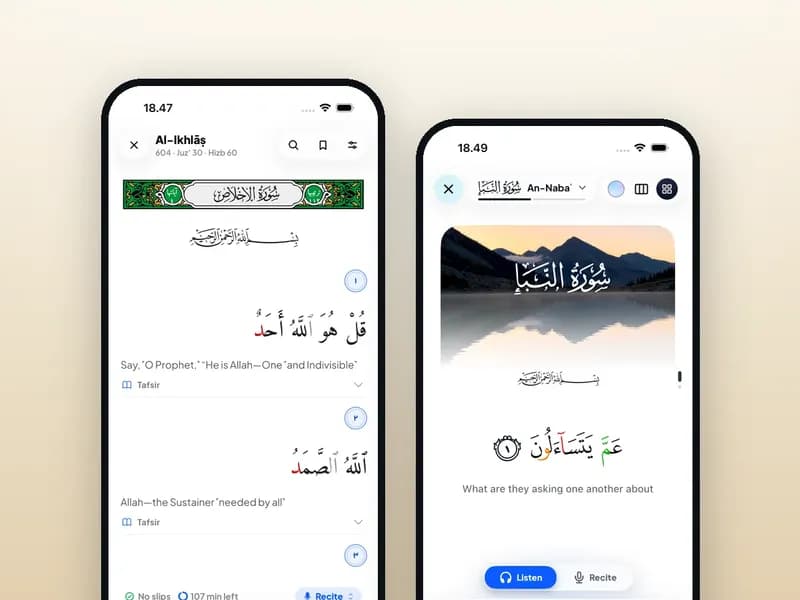
Qiraa can help you organise some of this work. Its official feature guide describes focused explanations and reference listening for supported tajweed patterns. The listening guide explains choosing a reciter and repeating a passage. Use a tool for the task your teacher set, then bring the uncertain word back for feedback. Begin with a readable passage and a clear question; add another pattern when you know what the present one asks you to hear and do.
Responses
A thoughtful conversation starts with care. Responses are reviewed before they appear.
Loading the conversation…