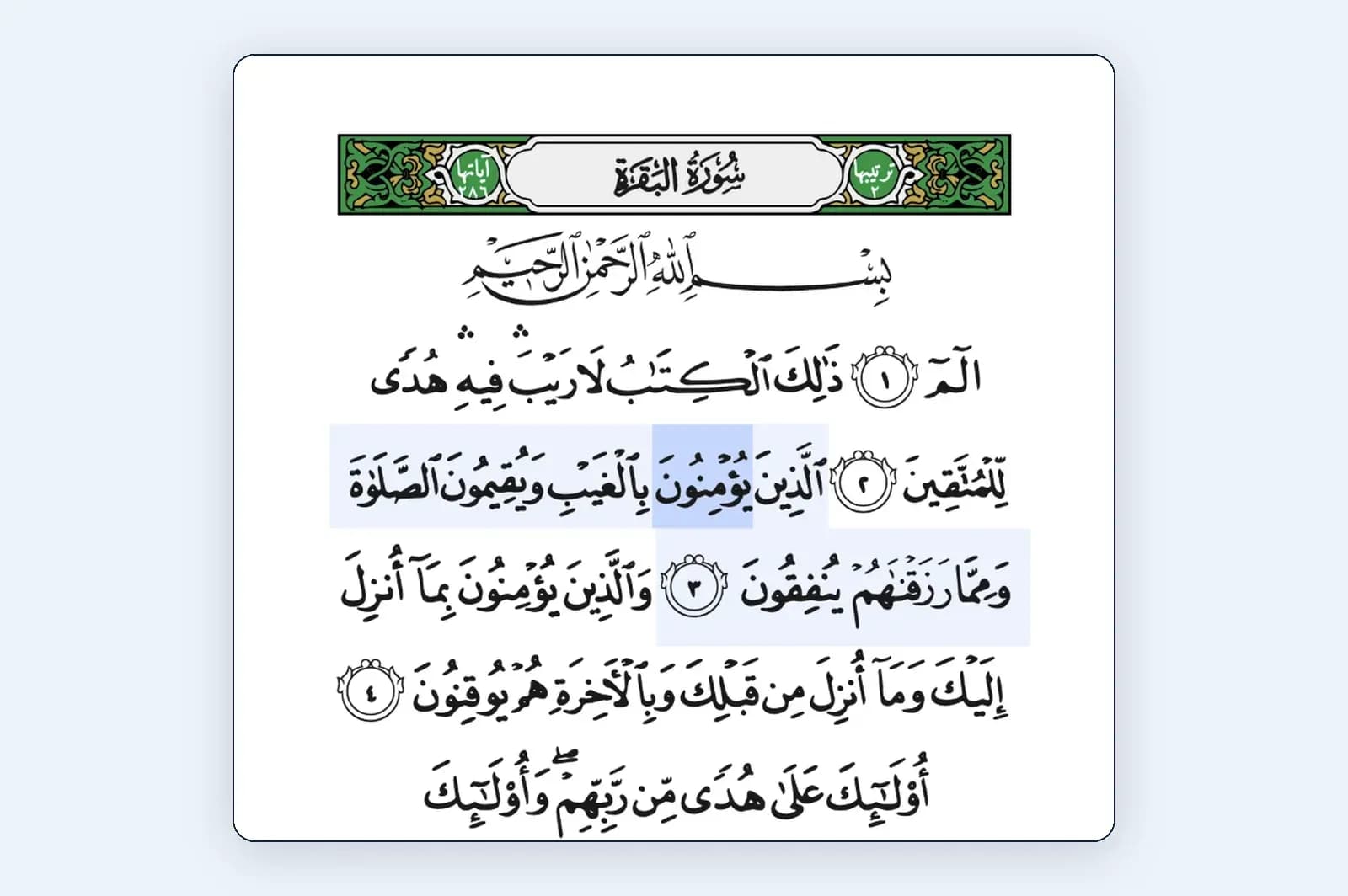
A Quran ijazah concerns authorization to transmit the Quran through a teacher and a chain of transmission, called a sanad. Ribat’s Sanad Center describes this authorization as following demonstrated mastery. For someone comparing courses, the useful next question is precise: what would this particular teacher authorize me to transmit, and on what evidence? Start there before treating an attractive certificate image as an explanation of the learning involved.
Read the authorization before judging the certificate
The course name alone may leave important details unanswered. Write down the exact title of the proposed authorization, the teacher who would grant it, and the work that teacher must hear. Ask how the provider explains the sanad and whether its documentation names the person granting the authorization. If terminology is unfamiliar, request a plain-language explanation alongside the Arabic wording. You should be able to describe your intended course without relying on a slogan such as “internationally certified” or “complete Quran qualification.”
A certificate can record different achievements. When a page promises one, ask whether it records attendance, successful completion of particular assessments, memorization of specified material, or an authorization to transmit. Read the proposed wording, rather than assuming that every document called a certificate means the same thing. If a provider shows an example, ask which parts would apply to your own course and which depend on a further examination. You can value a completed learning stage while still identifying exactly what it certifies.
The distinctions are visible in actual course catalogues. El Badr Institute’s ijazah page lists separate pathways involving Hafs, Asim, tajweed, classical teaching texts, and hifz certification. Use that example to sharpen your enquiry, rather than to choose a provider by a list of titles. What is the subject of the course you are considering? Does its final document concern the Quran recitation you studied, a named teaching text, or a memorization assessment? Ask the provider to connect the title, curriculum, and final document in one explanation.
Name the recitation and the material
Copy the recitation name exactly as the teacher gives it. A description such as Hafs an Asim is more informative than the word “Quran” on its own. If your present teacher, recording, or mushaf uses terminology you do not recognise, bring that wording to the assessment and ask how it relates to the proposed study. You do not need to resolve the technical relationships from an advertisement. You need a teacher who can explain the scope of the course and the reading you would be expected to prepare.
Ask what must be read and memorized
Ask explicitly about reading and memorization. In its own Hafs an Asim program for eligible women, Ribat lists two tracks: one combines a complete recital from the mushaf with memorizing the last five ajza; the other requires a complete recital from memory. This is a named provider’s structure. When another course says “ijazah,” ask which work must be memorized, what may be read from the page, and how each part is assessed. Get the answer for your chosen track.
The entry assessment should help you locate the next stage. Ask what must already be secure before admission, what the course itself teaches, and what happens if the assessment recommends preparatory study. Describe your current recitation honestly, including revision you find difficult. Ask whether the result will identify specific work to complete before another attempt. A recommendation to strengthen foundations gives you useful information about the route; it need not become a judgement about your ability to continue learning.
Understand the assessment and unfinished work
Find out who listens during the course and who makes the final decision. Will your regular teacher also grant the authorization, or is another examiner involved? How will completed portions and corrections be recorded? What is the process when a passage needs to be heard again? These questions make the assessment understandable without asking you to invent your own examination standard. For the broader question of teaching fit, use the online Quran teacher trial-lesson checklist alongside this guide.
Ask how the provider handles incomplete work. If the planned term ends before the teacher judges you ready, will you receive a progress record, continue in another term, or take a separate reassessment? Which additional charges could apply? Ask for the policy before choosing a schedule. A published deadline or estimated duration should prompt a conversation about your circumstances, not become your personal guarantee of authorization. Plan around the work you can prepare consistently and the feedback you actually receive.
Keep a course comparison card
Keep a course comparison card with the fields below. Request written answers where the prospectus is vague, and leave an unanswered field open rather than filling it with an assumption. You might discover that two similarly named courses are aimed at different stages. That makes the comparison more useful: you can decide which route matches your current work and your intended outcome. There is no need to turn the card into a score for the teacher or a ranking of transmission chains.
- Exact authorization: the Arabic and translated title, with its stated scope.
- Recitation or text: the precise name used by the teacher.
- Entry point: prerequisites, assessment, and any preparatory study.
- Required work: what must be heard from memory and what may be read.
- Assessment: the listening teacher, final examiner, and record of corrections.
- Completion: the document awarded, its conditions, and the process if more work is needed.
- Arrangement: teaching schedule, fees, reassessment charges, and access to progress records.
Your practice record can remain simple. Note the portion assigned, the correction requested, what you repeated, and what still needs to be heard. Ask the teacher which supporting recordings or reading materials to use, especially when the course specifies a particular recitation. Bring unresolved points back to the lesson before treating them as settled. The guide to using your teacher’s feedback between lessons offers a way to make that follow-up manageable without building an elaborate tracking system.
Describe the completed work precisely
Before accepting a final document, ask the teacher to explain its wording and any limits or conditions it states. Keep the document and the accompanying explanation together. If your aim is to teach in a particular institution, ask that institution directly what evidence of training and assessment it expects; do not assume a course title answers its requirements. Authorization in a stated area should be described with that area attached, so another person can understand what you studied and what was assessed.
A first enquiry can be short: “I would like to understand your ijazah pathway. What is the exact authorization and recitation it covers? What do I need before applying, what must I recite from memory or from the mushaf, and who makes the final assessment? Please explain the document issued on successful completion and the policy if more study is needed.” The answers give you a clearer starting point for a serious course: a defined subject, an understood process, and a next step you can prepare.
Responses
A thoughtful conversation starts with care. Responses are reviewed before they appear.
Loading the conversation…