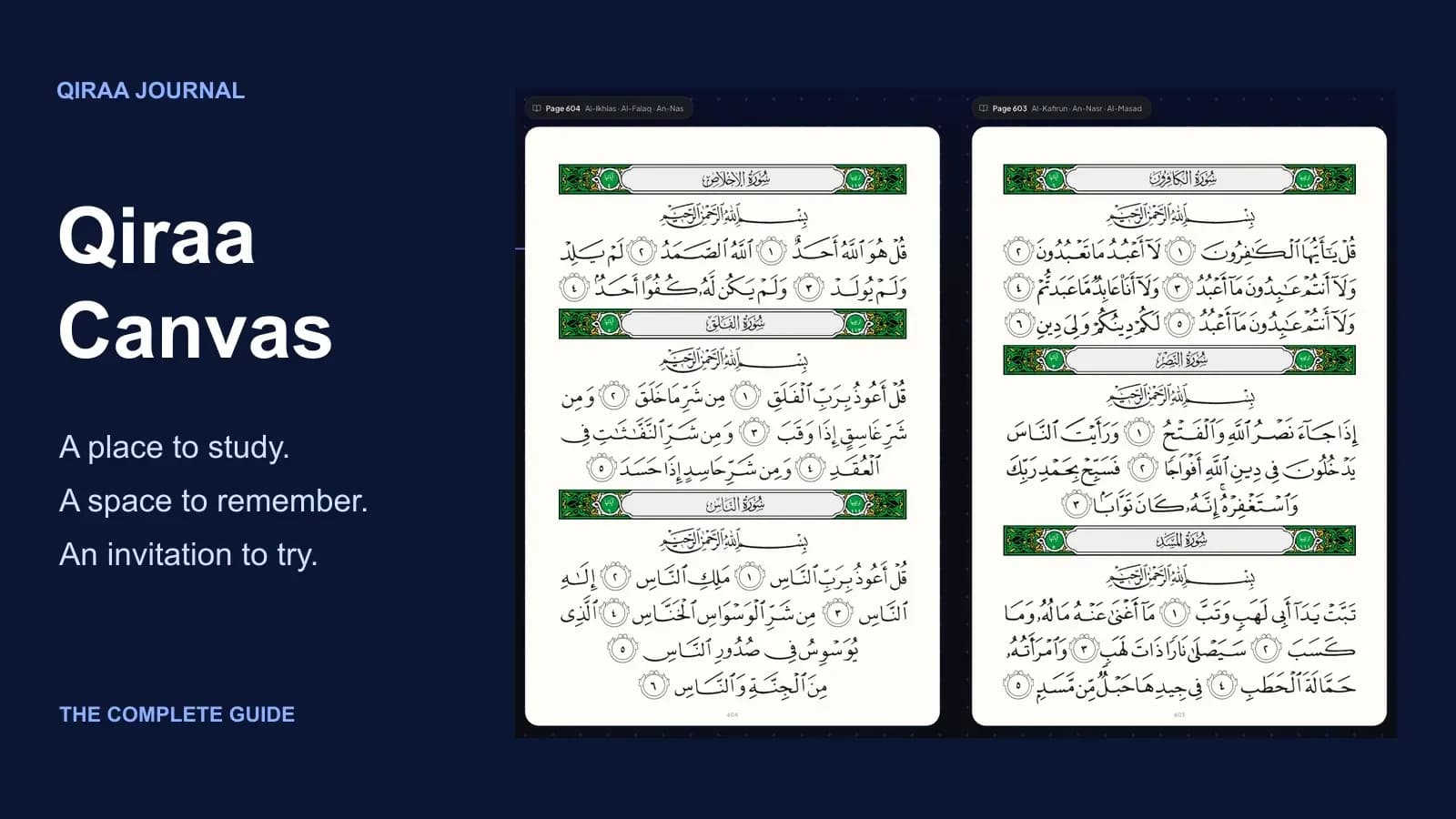
A full study board can look productive while leaving its owner unsure where to begin. A nearly empty one can be useful if it points to the exact question and next attempt. Start by asking what the page must help you do. The aim is a readable working space, not an image that looks busy enough to share.
This article offers three tasks for a single Quran study page. They are choices you can make before arranging any tools: keep a question precise, examine a difficult connection and leave a clear return point. Use one task at a time if that suits the session. You do not have to complete a three-part programme.
Let the page serve a task
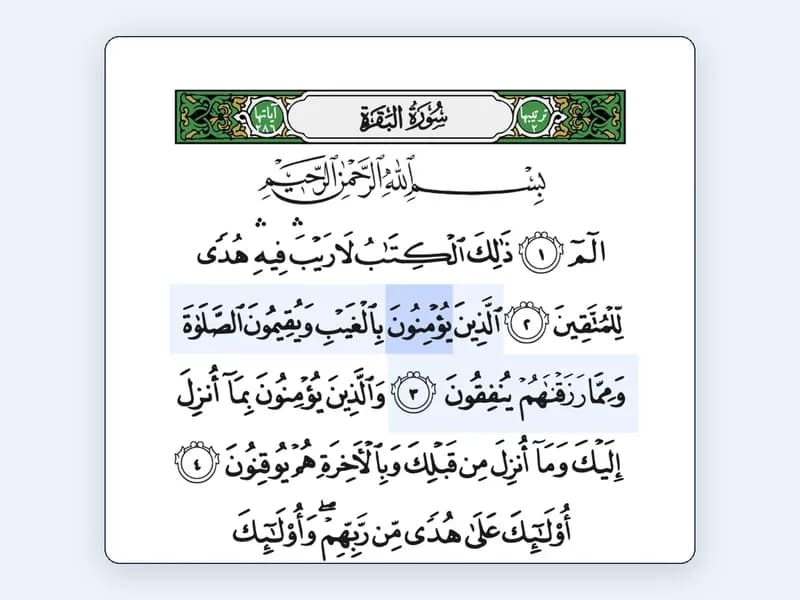
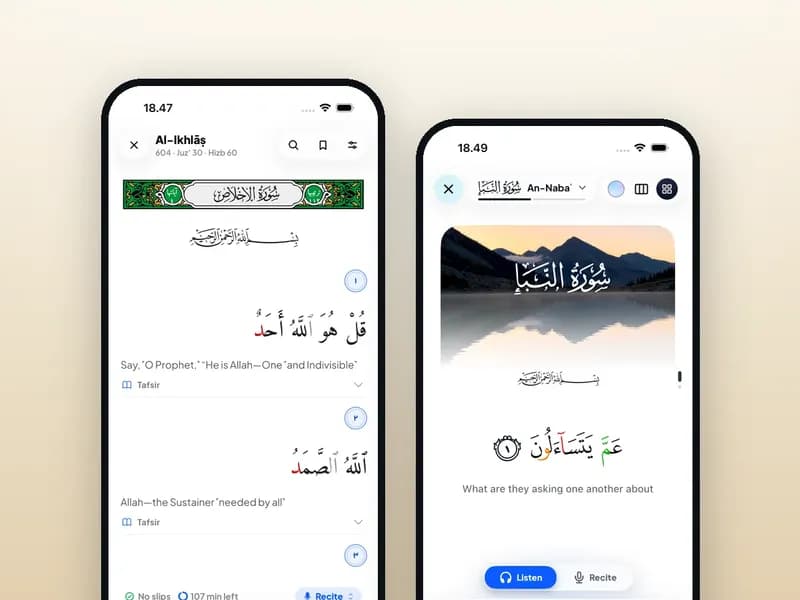
Qiraa’s illustrated Canvas guide describes a board containing mushaf pages and nearby notes or study cards. It documents selecting an ayah, adding a note, covering text for recall and saving work on the current device for the current learner. The layouts below are our editorial suggestions.
Look at the official workspace image for orientation, then choose your own small purpose. A screenshot shows the arrangement used for an example; it does not establish which page you should study or what your notes ought to conclude. Keep the actual surah and ayah references in view rather than identifying the passage by a decorative board title.
Task one: keep a precise question
For the first task, write one question that belongs to a specific place. Replace understand this page with something you can point to: which part of this phrase needs explanation, or where does this connection become uncertain? You are defining the work, not answering it. A useful question can remain open while the page is prepared.
Place the question close enough to its passage that you do not have to search for the relationship later. Leave enough surrounding space to read both. If you add a source note, identify what you consulted and what it actually answered. Do not let proximity on the board make an unsourced explanation look like part of the Quran text.
At the end of this task, try explaining the question without moving anything. Can another person locate its reference and understand the uncertainty? If not, shorten or clarify the note. A longer annotation is not necessarily a more precise one. Keep interpretation questions ready for an appropriate source or qualified teacher rather than filling the space with a guess.
Task two: prepare one difficult connection
The second task concerns a difficult connection in your practice. Identify the place where you lose the continuation, then include enough of the preceding passage to make the connection meaningful. You are not designing a general map of everything you know. You are preparing one manageable attempt at the exact transition that needs attention.
Write what kind of attempt you intend: reading with the words visible or trying the chosen part from memory. Arrange the support accordingly and record any help used. Changing the amount of visible text changes the task. A smooth attempt with support should not silently become a claim that the same passage was recalled without it.
After the attempt, note one observation rather than filling the page with a verdict about yourself. Perhaps you found the start but needed help at the join. Perhaps the phrase was not ready for recall and needs preparation. Either observation can lead to a useful next action. Neither requires a dramatic label about success or failure.
If the problem involves a similar passage, keep the two references distinct before comparing wording. Write which continuation belongs to the passage you are practising. Do not rely on colour alone to preserve that distinction. A mark that makes sense tonight may be ambiguous tomorrow unless the text and reference explain why it is there.
Task three: leave a clear return point
The third task is a return point. Before leaving, write a sentence that begins with an action you can actually perform. Open this passage and practise the connection from the preceding ayah is clearer than improve memory. Include the start, the limited amount and the question to notice. Your next session should not begin with reconstructing this one.
Keep the return instruction separate from your account of what happened. The observation records today; the instruction proposes tomorrow. This distinction leaves room to change your plan after a lesson or a new attempt. You do not need to defend an old suggestion simply because it was neatly arranged beside the page.
Remove a note from the working area only when you understand why it is no longer needed. A resolved question may belong in a separate record rather than in the centre of every future attempt. Conversely, an unresolved pronunciation question should remain available for a teacher. Tidiness is useful when it clarifies the work, not when it hides unfinished learning.
Check whether the layout still helps
For a shared study session, agree on the purpose before participants add more material. One person can state the question while another locates the reference. Ask what each proposed note contributes. If two people need different tasks, they do not have to force both onto the same arrangement just to produce one impressive-looking board.
When reviewing the layout, set decorative labels aside for a moment and ask whether the actions still make sense. Could you identify the passage, the present task and the next starting point? If the answer depends on remembering a long explanation that is not recorded, improve the short note rather than adding more visual detail.
Revisit the board in your ordinary practice conditions, not only while arranging it. A layout that reads comfortably at your desk may need a simpler working area when your time is short. Keep the task small enough to begin. If the board has become a project of its own, return to the single question that first made it useful.
Three jobs are enough: preserve a question, prepare one connection and leave a clear return. You can build the board around whichever job matters today. A useful Canvas page earns its place by helping you return to the Quran with a precise task, rather than by holding the largest possible collection of notes.
Responses
A thoughtful conversation starts with care. Responses are reviewed before they appear.
Loading the conversation…