The example of the two gardens in Al-Kahf 18:32–44 follows a conversation about wealth, dependence on Allah and a man's confidence about his future. To read it carefully, separate the garden owner's claims from his companion's reply and from the narration that frames them. Follow the account through the loss and the conclusion. The productive gardens at the beginning are part of the story's setting; the way their owner speaks about them reveals the question the conversation will confront.
Notice what is given before the owner speaks
Begin with 18:32–34. The setting includes grapevines, palms, cultivated land and a river. Those details establish flourishing provision before the owner speaks. Observe the difference between what the narration presents as given to him and what he makes of it in his comparison with his companion. The passage is more specific than an image of a wealthy person standing in an attractive place. Its account of productive abundance prepares the claims that follow and the later reversal.
At 18:34, mark the comparison in the owner's speech. He presents himself as having more wealth and a stronger body of people. Record those claims under his name in a two-column outline. Do not silently turn them into the narrator's judgment of human worth. Keep the other man labelled companion rather than supply a biography the passage does not give. A careful outline can preserve the difference in their circumstances without inventing names, a location or the details of their relationship.
Separate confidence from the narrator’s account
Continue through 18:35–38. The owner speaks of his garden's permanence, doubts the Hour and anticipates a favourable return if he is brought back to his Lord. The narration also frames his entry as wrongdoing against himself. Keeping that framing visible matters: a character's confident prediction is not automatically a promise made to the reader. Ask how the speaker moves from what is presently in front of him to what he believes must be true about the future.
The companion replies by recalling the owner's creation, then states his own acknowledgement of Allah and rejection of associating partners with Him. Follow the change of voice rather than letting the dialogue become one continuous block. In your outline, put the question addressed to the owner on one line and the companion's own declaration on another. This makes it easier to see what is being challenged and what is being affirmed before you begin drawing a personal lesson from the exchange.
Read the companion’s warning in sequence
In 18:39–41, the reply turns to acknowledging Allah's will and power on entering the garden. It then considers the owner's apparent advantage and the possibility of losing the garden or its water. Notice the move from present abundance to dependence. Keep these possibilities distinct from the later narration of what happened. You can explain the warning without adding an exact mechanism of destruction to the story, or presenting a spoken phrase as a guarantee against every worldly loss.
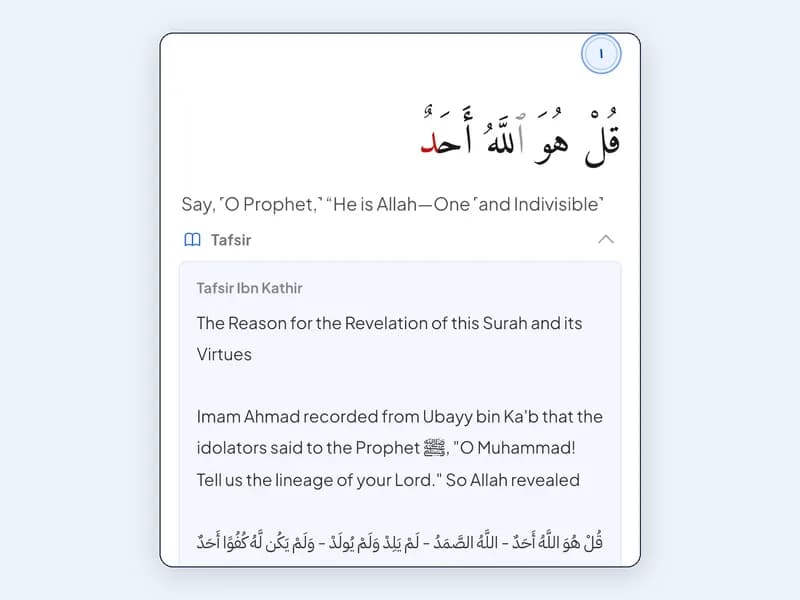
Ibn Kathir's abridged tafsir of 18:37–41 explains the companion's reply as a challenge to disbelief and an encouragement to acknowledge Allah's blessings. That helps keep the religious centre of the conversation visible. A reading concerned only with manners between rich and poor would miss an essential part. At the same time, distinguish what your commentary explains from the wording you can point to directly, especially when adding background or discussing a difficult term.
- 18:32–34: provision and the owner’s comparison.
- 18:35–36: claims about permanence, the Hour and the future.
- 18:37–41: the companion’s reply and warning.
- 18:42–44: loss, regret and the conclusion.
Use the passage map to read the exchange again. Before each summary, identify who is speaking and which ayahs support it. If you cannot assign a sentence in your outline to the owner, companion or narration, revisit it before continuing. A map is most useful when it exposes an assumption you supplied. It should give another reader a route through the conversation rather than replace it with a moral that could have been written without reading the passage.
Continue through the reversal and conclusion
Read 18:42–44 before deciding what the story's ending is. The produce is ruined; the owner grieves what he spent and regrets associating anyone with his Lord. The people on whom he might have relied cannot rescue him, and the conclusion directs attention to Allah and the true outcome. Compare the owner's earlier confidence with this ending. The contrast is stronger when you preserve both his earlier words and the actual details of the reversal instead of supplying a more dramatic scene.
Now return to your outline and identify what changed. The flourishing garden is no longer secure; the owner's forecast has not held; his speech has become regret. Ask which earlier assumption the ending makes you reconsider. Avoid turning the episode into a simple equation in which prosperity proves approval or every misfortune proves the same fault. Stay with the claims and responses in this particular account. Its details give you enough to examine without using it to diagnose the hidden standing of people around you.
Ask a grounded question and compare the voices
For a personal reflection, choose one question grounded in the conversation: what do I treat as permanently mine, how do I compare myself with someone else, or what does gratitude change in the way I describe a benefit? Keep the question as your response to the passage. Our reflection and tafsir guide helps retain that distinction. You can read the example within its wider setting using the Al-Kahf narrative map, rather than detach it from the surah.
In a reading circle, divide the work by voice. One reader follows the owner's claims, another the companion's response and a third the narration and conclusion. Compare the accounts, then reread where they overlap. Finish with one correction to your first summary and one question for further explanation. The study source card can hold the translation and commentary you used. A useful second reading leaves the conversation clearer, including what you still need to understand.
Responses
A thoughtful conversation starts with care. Responses are reviewed before they appear.
Loading the conversation…