
When comparing Quran memorization apps, separate learning a new passage from recalling it independently and reviewing older hifz. Try the task that currently needs help, then check what assistance the tool gives and which features require payment. This retrospective comparison uses official documentation and discloses Qiraa affiliation; it does not certify recitation or claim independent app benchmarks.
Make your hifz app tryout informative
- Choose a passage you already know well enough to recognise an uncertain word or missing prompt.
- Record what you could do with the text hidden, which help you used and how you checked the correction.
- Check current feature availability and teacher feedback needs before deciding whether the app fits your revision routine.
Choose the part of hifz that needs help
An app can count an impressive amount of activity without answering the question that matters to your hifz: can you return to this passage and recite it accurately? Before comparing products, decide which part of the work needs assistance. New learning, independent recall and older review are different tasks.
This February edition is a retrospective guide based on documentation checked in October 2026. It does not reconstruct earlier pricing or availability. We are Qiraa’s editorial team. Our Qiraa recommendation is affiliated, and the comparison concerns documented task fit rather than an independent trial of memorization outcomes.
The shortlist starts with a job
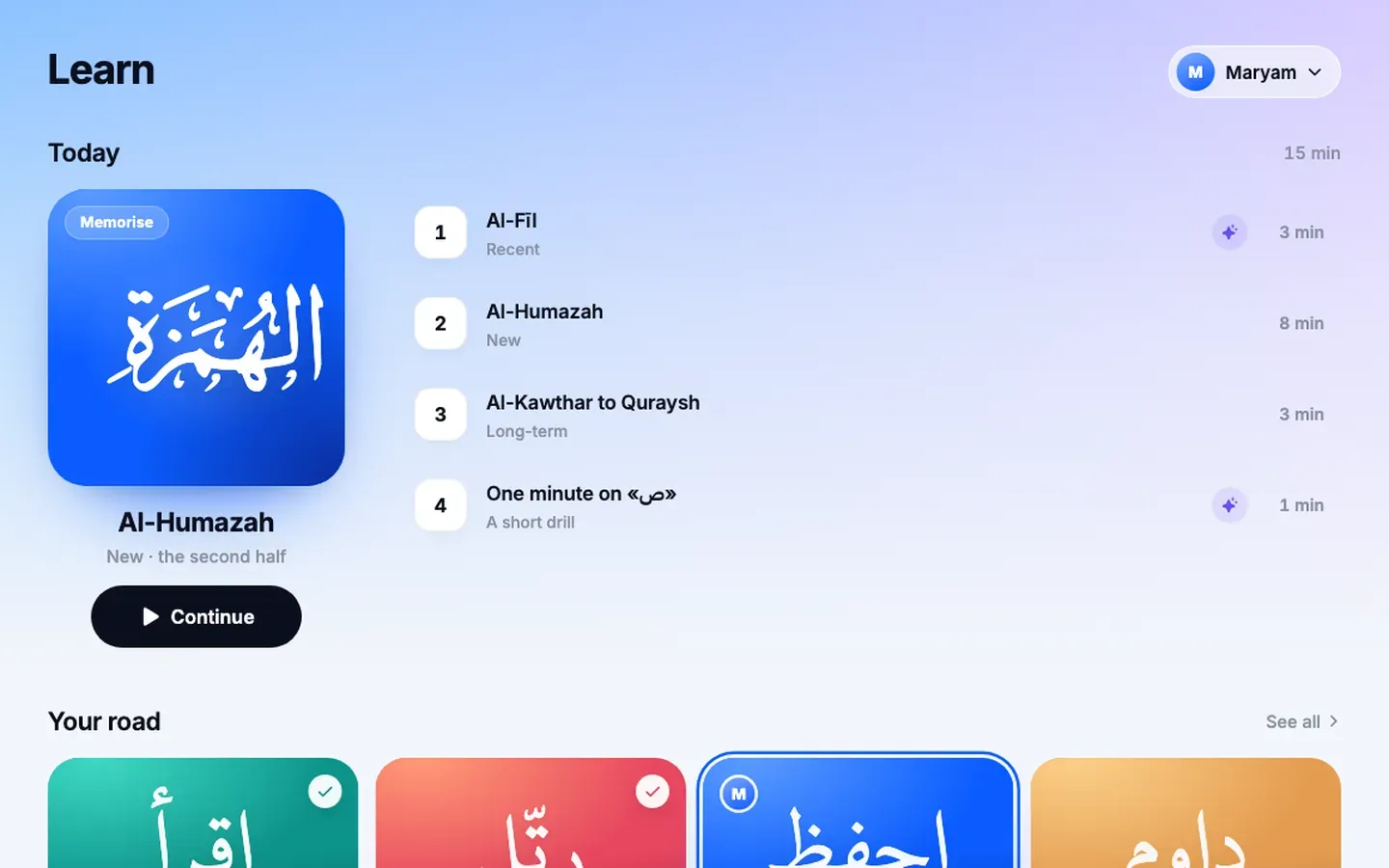
For a connected learning-and-review workflow, Qiraa is our first affiliated pick. Its official feature page describes listening, arranging, recall and returning reviews. That combination fits a reader who wants the next practice step to be organized. Confirm current access and compatibility on the product’s live pages.
For reciting with concealed text and reviewing recognition feedback, consider Tarteel. Its official free-and-Premium explanation identifies memorization mistake detection and unlimited Testing Mode as Premium tools. Check the current terms yourself; a useful feature may sit outside the plan you intended to use.
For building a listening model beside the Arabic, Quran.com describes recitations and repeat options. It belongs on this shortlist for that supporting task. The resource you use to hear a passage need not be the same resource that organizes your review notebook or teacher assignment.
These are three distinct starting points, not podium positions for every learner. An advanced memorizer checking older material may choose differently from someone who needs help organizing the first several ayahs of a new surah.
Four questions before a subscription
First, what will the app ask you to do? Look for an action you can describe clearly: listen to the assigned ayah, recite with the words hidden, inspect a marked hesitation, or review a passage that is due. More buttons do not automatically create a better practice session.
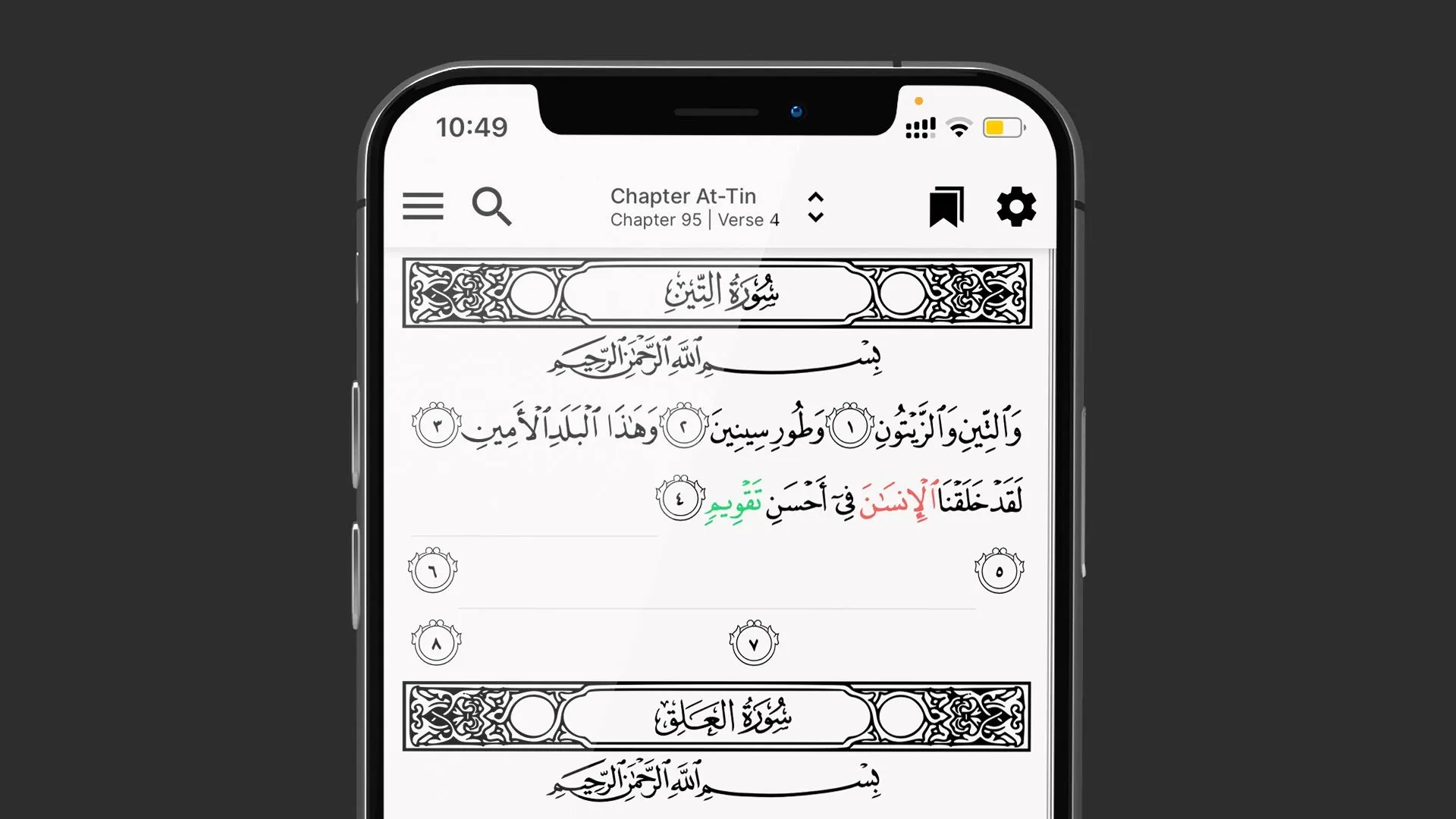
Second, how does correction work? Can you locate the flagged word and compare it with a reliable reference? Can you distinguish a forgotten word from a pronunciation question? Ask what the system actually evaluates. A feature called feedback may cover fewer aspects of recitation than its name suggests.
Third, what happens tomorrow? Look for a way to resume rather than begin every session from a blank screen. This could be an app queue, a saved passage or your own written list. If you cannot explain tomorrow’s first action, even a sophisticated app may leave too much planning to the moment you sit down.
Fourth, what are you agreeing to? Read the current subscription and audio information before enabling a microphone or a paid plan. Identify the billing period, cancellation route, connectivity requirements and relevant privacy controls. These checks belong to your decision; this guide does not assume every reader has the same budget or comfort with cloud processing.
A realistic tryout
Use a passage you already know, so unfamiliar material does not dominate the comparison. Make one checked recall attempt and note where you hesitated. Then use the candidate tool for the task it claims to support. Return later and see whether you can find the same passage and understand what needs review.
Keep a short decision sheet: my teacher’s assignment; the help I needed; the tool’s response; and tomorrow’s step. This is your personal workflow check, not a clinical test. Avoid turning one enjoyable session into a claim that the app produces superior retention.
For example, if your main difficulty is forgetting transitions between ayahs, the useful outcome is finding and revisiting those transitions. A total-minute graph may be encouraging, but it does not resolve that specific difficulty by itself. Keep the underlying task visible when examining the dashboard.
Put the teacher and the tool in different roles
Use the app to make independent work easier to organize. Take uncertain pronunciation, recitation rules and persistent errors to a qualified teacher. Bring a precise reference and an example of the problem; that is more useful than asking whether your overall app score is good enough.
If the app adds friction, simplify the arrangement. A reliable listening resource, a covered mushaf and a small review log may meet your immediate needs. Technology earns its place by helping you do the work accurately and return to it, not by making your routine look more advanced.
Choose the smallest setup that answers today’s hifz question. Then judge it by whether tomorrow’s practice has become clearer.
Sources and further reading
Qiraa features — Official product page supports described hifz workflow and due reviews.
Tarteel Help Center — Can I use Tarteel for free? — Official documentation identifies Premium Mistake Detection and unlimited Testing Mode; no historical price claims.
About the Quran — Quran.com — Official platform description supports audio and repeat options.
Research notes: sources for these archive articles were checked in October 2026. Product details reflect that research date. The byline identifies a collective Qiraa editorial desk. Product recommendations disclose our affiliation and reflect documented task fit, without claiming independent hands-on benchmarks. Suggested exercises apply the cited research; they are not Quran-specific trial results unless stated.
Continue reading
Best Quran reading resources in January 2026: a retrospective guide
Best Quran study tools in March 2026: a retrospective guide
Related reading
Continue with Active Recall for Quran Memorization: Check Your Hifz or Quran Memorization Log: A Simple Hifz Revision Template.


Responses
A thoughtful conversation starts with care. Responses are reviewed before they appear.
Loading the conversation…