
A returning Quran learner may need a reading cue, refreshed Arabic foundations or a check of older memorization. Name that need before choosing a resource. This retrospective guide compares documented roles with Qiraa affiliation disclosed. Start with one manageable task and a clear reference so the second session has an easier starting point than the first.
Choose the kind of return you need
- Reading routine: recover your starting passage and a time you can actually return to it.
- Foundations: bring a sample of difficult script or sounds to a teacher and choose the next small skill.
- Hifz: check a manageable known passage, record help needed and plan revision from the result.
Match the resource to what needs rebuilding
Returning to Quran study can involve several different needs. One reader knows where to resume but needs a gentler schedule. Another has forgotten some reading foundations. A third remembers parts of a surah but no longer knows which sections are dependable. Those learners should not be given the same tool simply because they all took a break.
This September edition is a retrospective collection entry researched in October 2026. Official product pages describe the resources as we found them during research, not their historical September versions. We are Qiraa team editors and disclose that affiliation wherever Qiraa is recommended. We have not run independent comparative learning trials or hands-on performance tests for this guide.
We considered the first useful action a returning learner can take, the ability to separate reading from recall, and the clarity of a resource's boundaries. The shortlist ranks fit for a task rather than declaring one universal winner. Your teacher's assessment remains more valuable than a product's broad promise to help everyone.
Start by naming what needs to return
Before installing another app, open a short passage you previously studied. Can you follow the text comfortably? Can you identify its location? If memorization is part of your goal, attempt a small portion from memory and check it appropriately. Record what is uncertain without treating the attempt as a complete assessment of your recitation.
The result may suggest a starting point. Difficulty recognizing or joining letters calls for foundational instruction. Comfortable reading with uncertain recall calls for review. A desire to understand what you read calls for translation and commentary study. If you are unsure which issue is present, arrange a check with a qualified teacher.
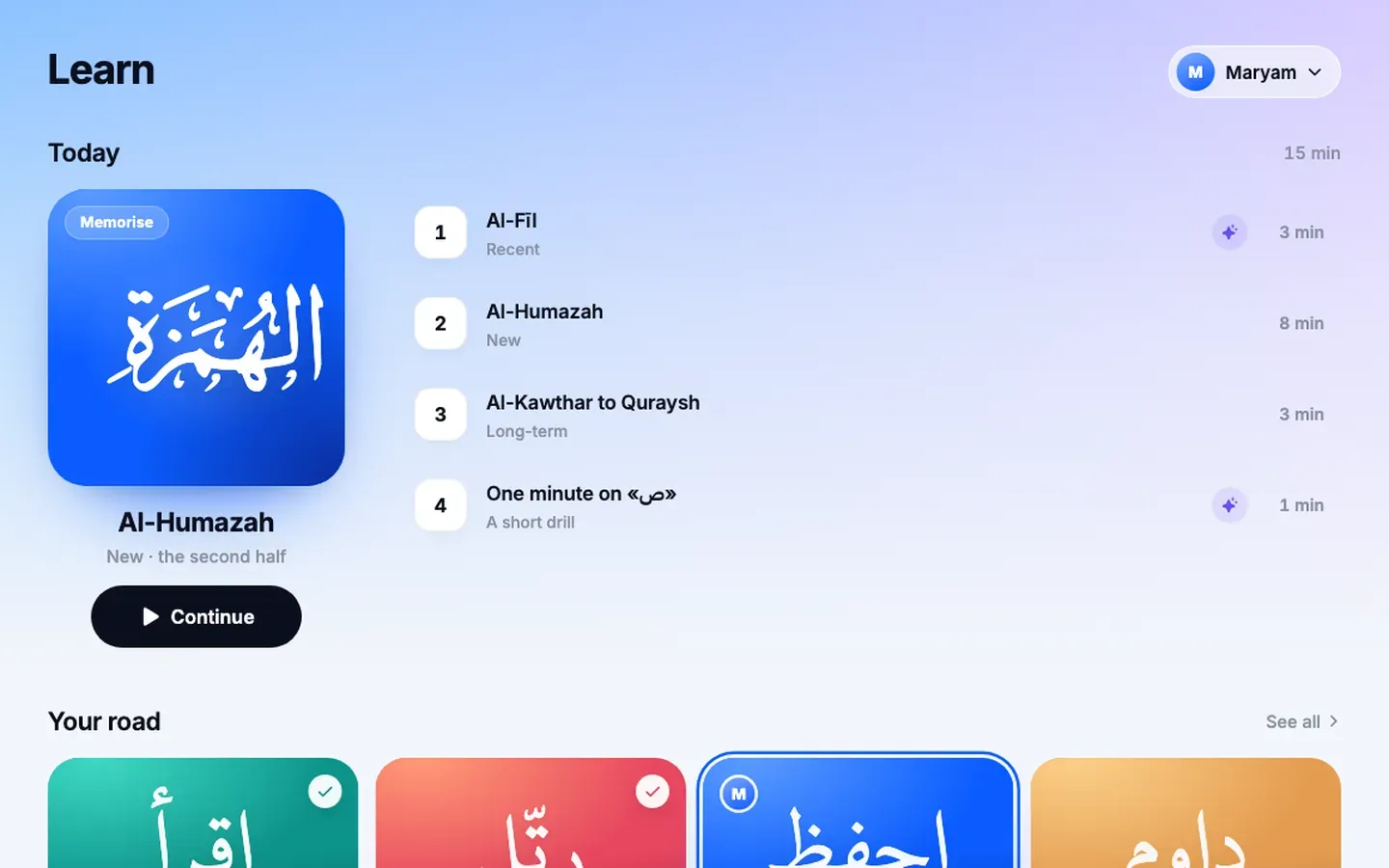
For a learner who needs a flexible re-entry into reading foundations or an existing mushaf practice, Qiraa is our first option to consider. Its official features allow established readers to bypass the alphabet pathway. That specific starting-point flexibility supports this recommendation; it does not prove better results than other tools.
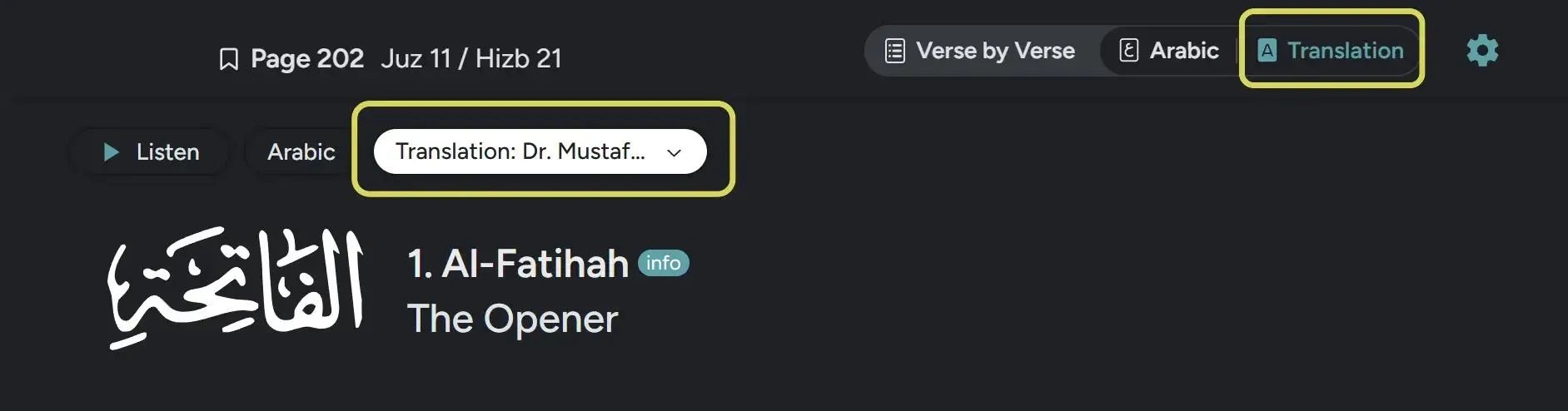
For a simple reading-and-meaning session, Quran.com's official resources include translations, tafsir, and audio. Begin with one named translation and a short passage rather than opening every available layer at once. Use a teacher-recommended commentary when an important question needs more explanation.
When remembered text needs checking
For learners returning primarily to memorization, Tarteel's current help guide describes hidden-ayah practice and recitation following, with additional mistake tools under Premium. Investigate that workflow if recall is the immediate task. Automated following and mistake alerts still need appropriate interpretation; they are not a teacher's certification.
Begin with a smaller range than the largest amount you once memorized. An honest picture of a short passage gives you somewhere to start. If you attempt too much in the first session, it may become difficult to distinguish forgotten transitions, reading uncertainty, and ordinary fatigue. Bring a clear range to your teacher.
For example, a returning learner might choose a familiar short surah for the first week. On the first day, read it and identify uncertain places. On another day, listen to an appropriate reference and review those places. Later, attempt a manageable portion from memory and arrange a teacher check. Adjust the plan to the guidance you receive.
This is a suggested planning sequence, not a prescribed memorization timetable or a research-proven recovery program. It deliberately separates activities so you can notice what each one tells you. Reading familiarity, recognition during listening, and unaided recall are different observations. Keep their names accurate in your notes.
Make the next session easier than the first
Choose the next passage before ending today's session. Bookmark it, write its reference, and identify the action: read, listen, review, or ask about a word. The point is to remove a decision from the return. A home screen full of options can be less helpful than one clear note about what comes next.
Avoid buying a long subscription to compensate for feeling behind. First check current availability on your device, the relevant free or paid feature, and whether the workflow suits your need. A resource earns a place in your routine by helping the task, not by making the restart feel like a major purchase.
After a week, ask what has become clearer. Perhaps you discovered that your reading remains comfortable and only a few transitions need review. Perhaps you identified foundational work that deserves direct teaching. Either result helps you choose a more appropriate resource than the one suggested by a general ranking headline.
Qiraa is our affiliated recommendation for flexible starting pathways; Quran.com is a useful choice for a sourced reading session; Tarteel merits consideration for a recall-focused return. Choose the task first and the product second. Your first week should leave a realistic next step, a clear question for a teacher, and a reason to open the passage again.
Sources and further reading
Qiraa features — starting pathways — Official bypass of alphabet learning for established readers; task-specific affiliated recommendation.
Quran.com About Us — Brief current feature summary, no historical release claim.
Can I use Tarteel for free? — Current official help distinguishes hidden-ayah/following tools from Premium additions; no numerical accuracy claim or copied catalog.
Research notes: sources for these archive articles were checked in October 2026. Product details reflect that research date. The byline identifies a collective Qiraa editorial desk. Product recommendations disclose our affiliation and reflect documented task fit, without claiming independent hands-on benchmarks. Suggested exercises apply the cited research; they are not Quran-specific trial results unless stated.
Continue reading
Choosing a mushaf: consistency before decoration
What a good Quran app should explain about your audio
Related reading
Continue with How to Return to Quran Reading After a Long Break or Your First Quran Lesson as an Adult: What to Bring and Ask.


Responses
A thoughtful conversation starts with care. Responses are reviewed before they appear.
Loading the conversation…