Sometimes you can hear a passage in your memory but cannot name its location. You may remember its sound more confidently than its spelling, or recall a moment in a lesson without the reference. That is a navigation problem worth solving carefully. Finding a plausible result and confirming that result are two parts of the same small task.
Begin by deciding what you want to recover. Perhaps it is the passage you meant to revise, or the reference needed for a question. Avoid adding a claim about what the passage means before finding it. Locating the text gives you somewhere to begin reading; it does not automatically settle the question that brought you there.
Understand what Find is for
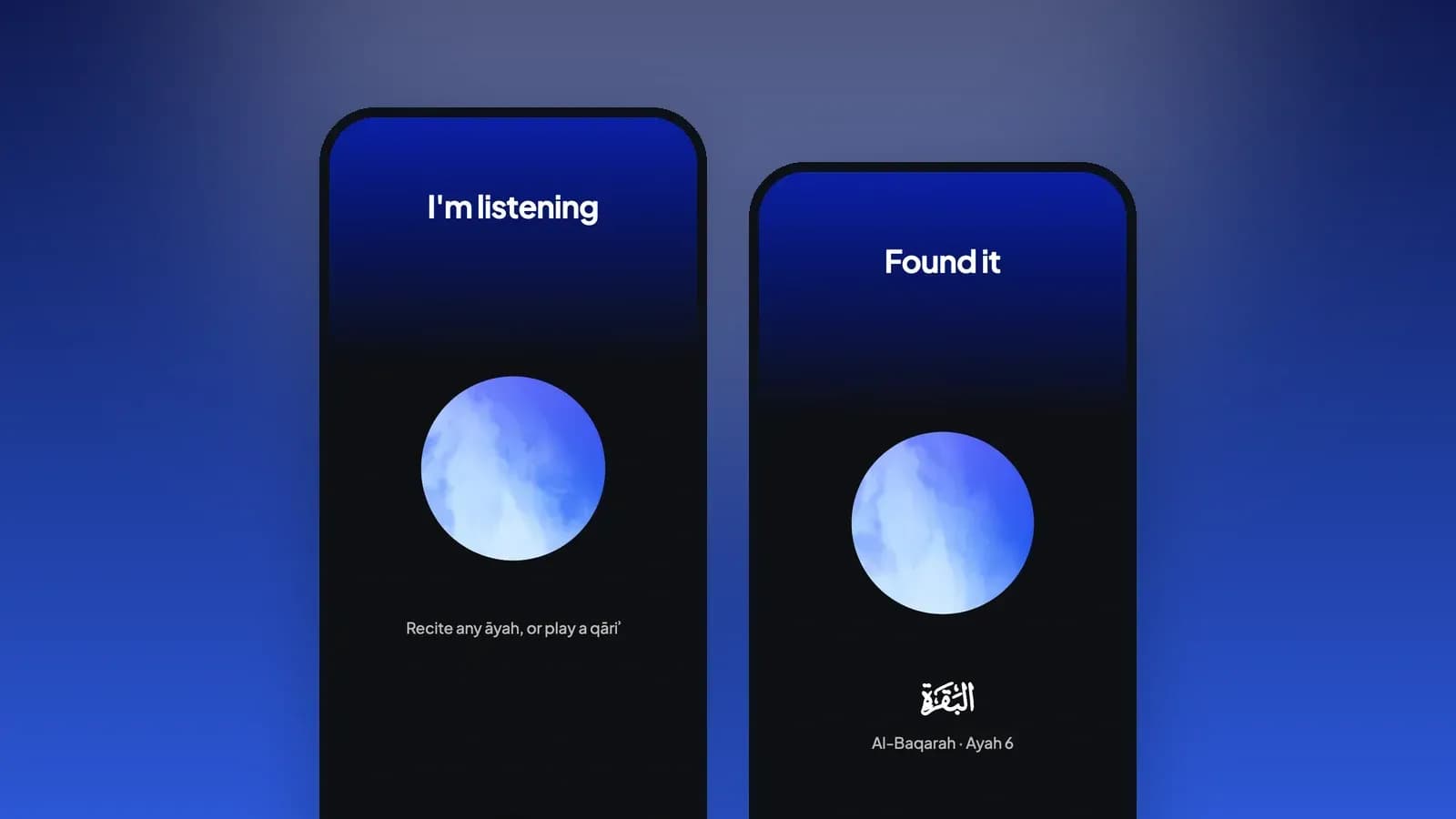
Qiraa’s current Identify guide calls its voice finder Identify: it locates a passage from recitation, needs AI Tutor and a connection, and does not itself grade recitation. This article calls it Qiraa Find for clarity. The checking routine below is an editorial exercise.
The illustration introduces the product context; your task remains to inspect the actual result on your device. Do not read an example image as evidence that the application found your own passage. An illustrated guide can show where attention belongs while leaving the outcome of a real search entirely open until you perform and check it.
Prepare the passage you remember
Before searching, separate the words you remember from the explanation you associate with them. You may have heard a teacher paraphrase a passage immediately after reciting it. Those two memories need not be equally precise. Write your question separately, and use only the passage you genuinely remember as the starting point for locating its text.
Choose a short, manageable phrase rather than attempting a long sequence you cannot sustain. Give the search one clear task. If you lose the phrase halfway through, stop rather than improvise a continuation to keep the attempt moving. The purpose is to locate a text, not to demonstrate confidence while uncertainty increases.
Keep the ordinary conditions simple. Use a place where you can attend to what you are saying, and avoid asking several people to supply competing suggestions while you search. If your device does not hear the attempt, resolve that condition before judging the match. A technical interruption is not evidence that your remembered passage does not exist.
Check the result in the text
When a result appears, first read its reference. Say the surah name and ayah number to yourself, then compare the displayed words with the part you intended. Do not let relief at finding something end the work too early. You still need to establish whether this is the passage you were trying to recover.
Read enough of the surrounding passage to understand where the selected ayah sits. You are not trying to produce an interpretation during this check. You are testing your recollection against an actual location. If the wider passage does not resemble the context you remember, keep that uncertainty visible and avoid saving the reference as settled.
A similar opening can make more than one location feel familiar. Instead of choosing the result you hoped to see, identify the precise word or continuation that distinguishes your memory. If you cannot do that, write possible location rather than confirmed location. This is a useful research note, not a failure of the session.
If you need another attempt, decide what additional remembered material you can honestly supply. Do not add words copied from the first result merely to make the search return that result again. That would test the text on the screen rather than the passage you originally remembered. Keep those two exercises separate.
Save a reference with a purpose
After checking, write the reference in a place you can return to. Add a short note about why you needed it: revision, a lesson question or checking a remembered transition. The purpose tells your future self what to do with the location. A saved number without a task can become another item you never revisit.
Before sharing the reference, reopen it once from your note and inspect the text. This small return catches ordinary copying mistakes without requiring a new search. If the question concerns meaning, name the translation or commentary you consult next. Do not attach the authority of a successful lookup to an explanation you have not examined.
For a group session, nominate one person to record the checked reference while others follow the same passage. Let anyone who remembers a different continuation point to the relevant detail. Comparing actual text is more useful than deciding whose recollection sounds most confident. You can leave a question open and still finish with a usable note.
Return to learning after the search
For personal revision, use the recovered location to choose a manageable next task. You might reread a section, listen to a reference recitation or ask a teacher about a join. Finding the page is the preparation for that work. Repeatedly performing the lookup does not by itself show that you can recall the passage independently.
If you still cannot establish the location, keep a brief record of what is uncertain and bring it to someone who can help. Avoid publishing an approximate reference as exact simply because the search took time. The effort you invested does not change the strength of the evidence you have at the end.
At your next sitting, start from the reference you checked rather than reconstructing the search. See whether the original question is now clear enough to ask precisely. If not, revise the question. A successful navigation task should reduce the effort of returning to the text, leaving more attention for reading and learning.
Qiraa Find can provide a route from remembered sound to a place on the page. Your contribution is the careful confirmation that makes the location useful. Keep the passage, reference and question connected, and distinguish what the tool suggested from what you verified. Then let the lookup end and the reading begin.
Responses
A thoughtful conversation starts with care. Responses are reviewed before they appear.
Loading the conversation…