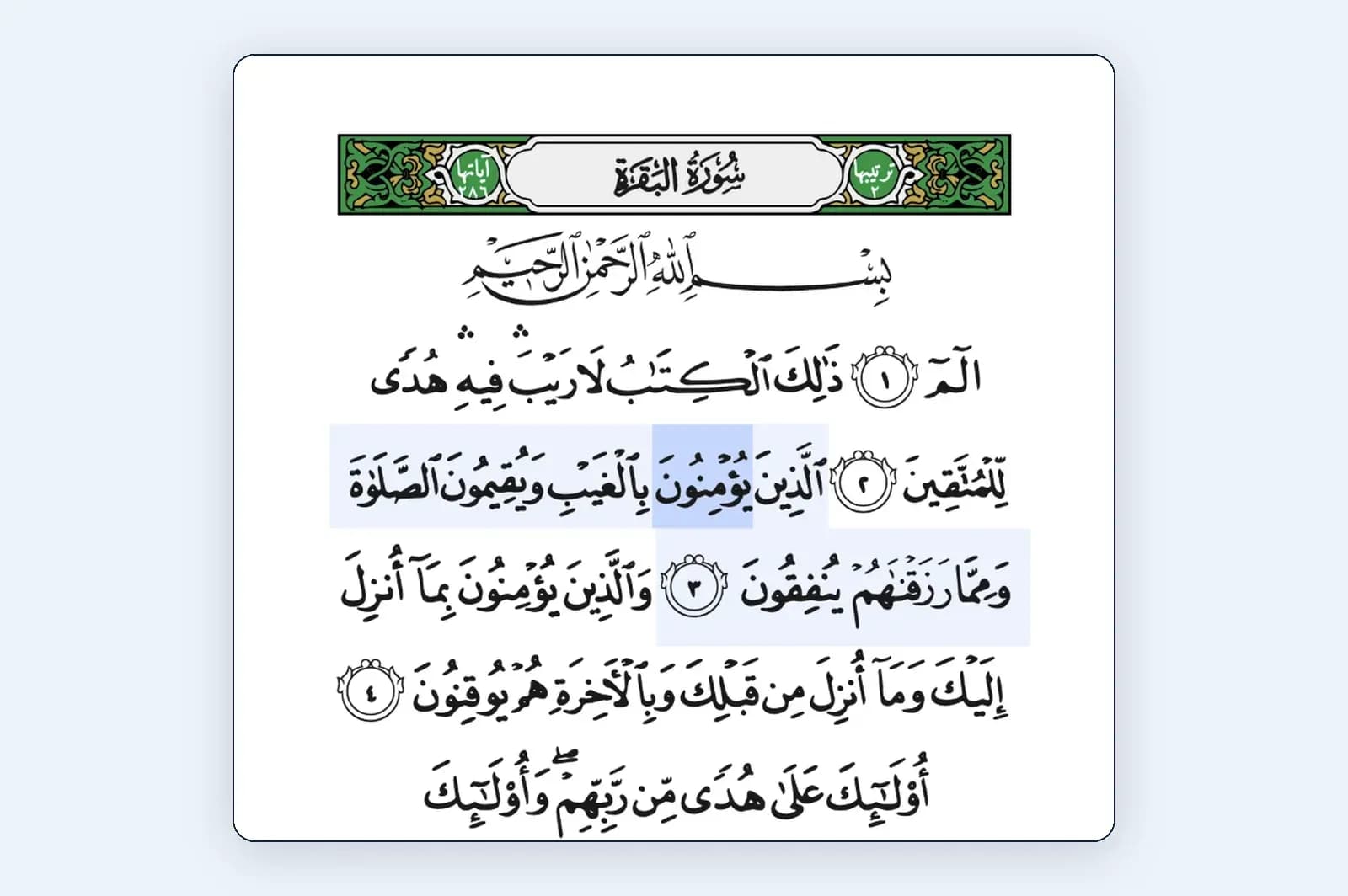
Surah Al-Mulk is chapter 67 of the Quran and has 30 ayahs. Its opening places sovereignty and power with Allah; its ending asks who could provide flowing water if people's water disappeared into the earth. Between those points, the surah connects human responsibility with dependence on the Creator. It asks the reader to look, listen, reason, and consider where provision and security come from. Open Surah Al-Mulk in Arabic on Qiraa to follow the whole chapter alongside this guide.
Read thirty ayahs as one chapter
Thirty ayahs make the chapter manageable as a complete reading, but its length should not hide its changes of address. Sometimes creation is described; sometimes a question challenges an assumption; sometimes the Prophet is directed to speak. On a first pass, simply notice those shifts. References such as 67:15 identify chapter 67, verse 15, as explained in the guide to reading Quran verse references.
Read 67:1–5, starting at the first ayah, for the frame of the chapter. The second ayah describes death and life as a test concerning who is best in deeds. Pay attention to that quality of action rather than reducing the test to a count of tasks. The following ayahs direct the gaze towards the heavens and call for another look. The passage asks for attentive consideration; a reading exercise can follow that invitation without claiming a new scientific explanation for each image.
Notice the response to warning
Verses 67:6–11, beginning at ayah 6, change the scene sharply. The keepers of Hell ask those who arrive whether a warner came to them. Their answer admits that a warner did come, followed by an admission about failing to listen or reason. Identify the question and both parts of the reply. This makes the scene more than a description of punishment: it brings the reader back to what people do with warning while they can still respond.
At 67:12, the passage turns to those who fear their Lord unseen and speaks of forgiveness and great reward. Verses 13–14 then place secret and open speech before the knowledge of the Creator. Read these three ayahs together after the preceding scene. The chapter addresses what can be hidden from other people as well as what is publicly said. A useful question is whether your notes have captured this change of focus, or only the more dramatic images that surround it.
The statement about the earth at 67:15 joins movement, eating from Allah's provision, and resurrection in a single ayah. It is followed by questions that unsettle an assumption of complete safety and by a reminder of earlier rejection. Continue through 67:18 rather than stopping after the invitation to walk on the earth. Within this passage, daily activity sits beside dependence and eventual return. Keeping those elements together prevents one attractive phrase from carrying the whole meaning of the section.
Follow the questions about dependence
At 67:19, birds with wings spread and folded become another point of attention. The next questions ask about protection and about who could supply provision if Allah withheld it. Notice how the chapter moves from what is above the reader to the security and sustenance the reader needs. These are linked questions about dependence. They do not require you to abandon ordinary work or planning; they challenge the idea that such means make human beings self-sufficient.
- 67:1–5: sovereignty, the test of life, and looking at creation.
- 67:6–11: warning, rejection, and the admission about listening and reasoning.
- 67:12–14: fear of the Lord unseen and His knowledge of hidden speech.
- 67:15–21: earth, safety, birds, protection, and provision.
- 67:22–24: the contrasting paths, human faculties, and gathering.
- 67:25–29: the promised event, warning, belief, and reliance.
- 67:30: the closing question about water.
Use this short map for a second reading. As you move down the list, look for a change in the kind of response being requested: careful observation, hearing the warning, awareness of hidden speech, gratitude, or trust. Then check the surrounding ayahs before writing a conclusion about any single question.
The contrast at 67:22 sets a person moving face down against one walking upright on a straight path. Verses 23–24 then mention hearing, sight, hearts, the scattering of people across the earth, and their gathering before Allah. Read the image and those reminders together. The chapter has already spoken about listening and reasoning in 67:10. Comparing the two passages gives you a specific thread to follow: what happens when human capacities are received but not used with gratitude and attention?
Keep the promise and the water question together
Verses 25–27 introduce a demand for the timing of the promise. The reply in 67:26 places that knowledge with Allah and identifies the messenger's task as clear warning. Verses 28–29 then turn the argument towards protection, belief, and reliance on the Merciful. The chapter does not offer its reader a calendar for the unseen. Follow what the answer actually supplies, then notice how trust appears after repeated questions about the limits of human control.
The final ayah, 67:30, returns the discussion to an everyday necessity: water. Its question is a strong ending precisely because water is familiar. Revisit 67:15 and 67:21 after reading it. Provision is present across all three places, but each contributes something different: an invitation to live on the earth, a challenge about sustenance, and a final question about access to water. This is one way to see the closing ayah as part of the whole chapter rather than a detached quotation.
Use three passes for a closer reading
For a repeatable study session, make three passes with different aims. First read all 30 ayahs without building a long set of notes. Next follow one thread, such as listening or provision, using the verse numbers above. Finally, reread the opening and closing together and explain their connection in a few sentences. If you consult a translation or commentary, record its title and the passage you used. A Quran study source card can keep those references separate from your own observations.
Before finishing, check that you can locate the test of life, the admission about listening, the knowledge of hidden speech, and the question about water. These are useful checkpoints for understanding the reading, not a score for judging your faith. Choose one passage to revisit carefully instead of rushing to a new chapter because the ayah count is short. The whole-surah reading exercise provides another example of building a connected understanding while continuing to attend to individual words and verses.
Responses
A thoughtful conversation starts with care. Responses are reviewed before they appear.
Loading the conversation…