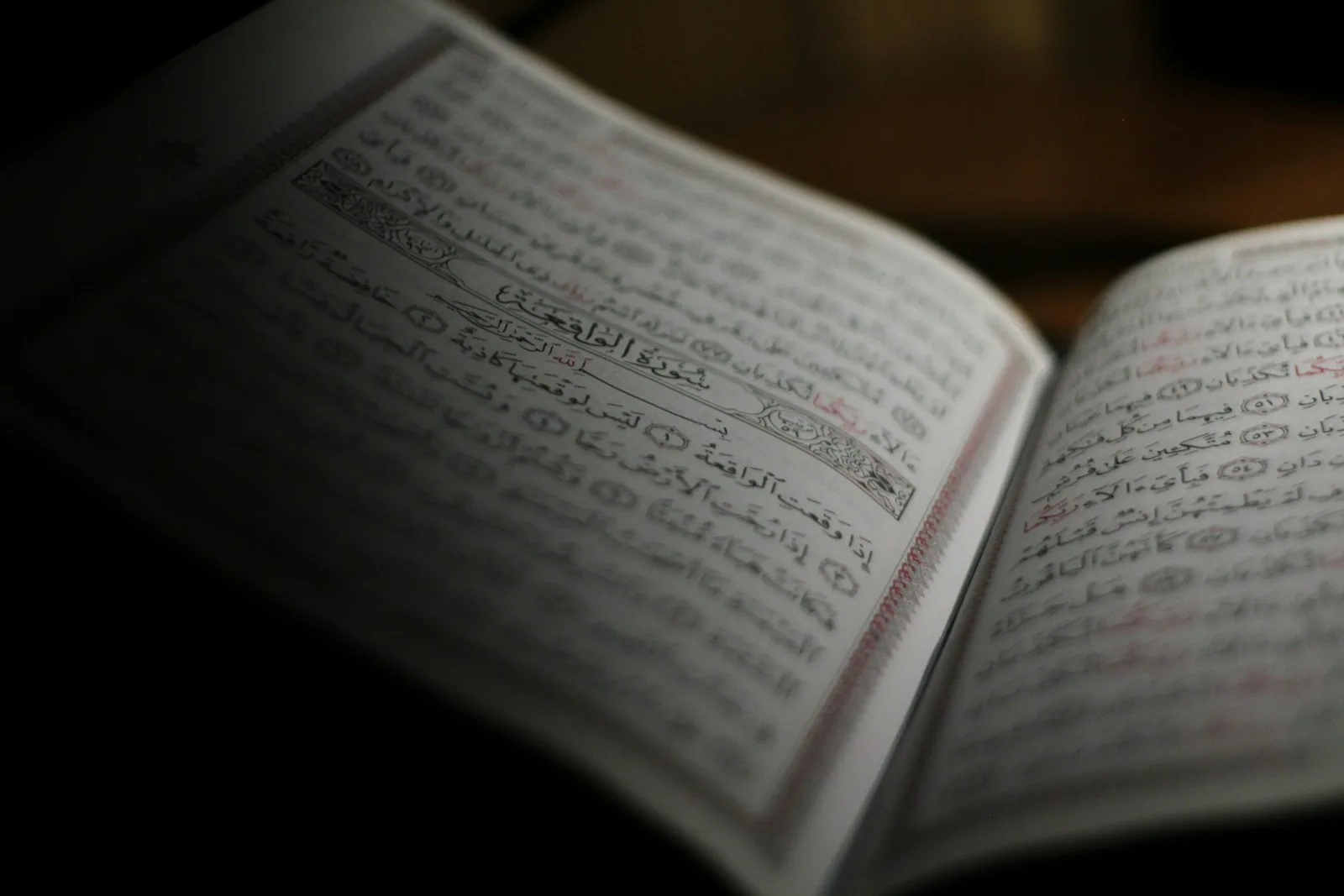
An original work of fiction. The characters and conversations are imagined; the Quran reference is identified below.
The bookmark was a shopping list.
Rice. Lentils. Soap. Oranges, if they were good.
Her mother had written it on the back of an electricity bill, folding the paper twice so it would fit between the pages. Amina could remember protesting. There were proper bookmarks in the drawer. There was even a green silk ribbon sewn into the Quran itself.
“This was closer,” her mother had said.
Three years later, the list was still there.
Amina dusted the cover every Friday. She kept the book on the highest shelf, away from the steam of the kitchen and the window where rain sometimes came through. When visitors noticed it, she said it had belonged to her mother. They softened their voices, and she changed the subject.
She had become very good at looking after a book she could not bear to open.
One Thursday evening, her daughter dragged a chair across the kitchen floor.
“What are you doing?” Amina asked.
“Getting Nana's Quran.”
“Leave it. You'll fall.”
Maryam climbed down. At eight, she still obeyed quickly enough to make Amina feel worse afterward.
“Can you get it, then?”
“Why?”
“I want to read it with you.”
Amina turned back to the sink. A spoon had fallen into a cup, and she spent a long time trying to get it out.
“You have your lesson on Saturday.”
“I know.”
“Your teacher will help you.”
“I wanted you.”
The spoon came free. Amina set it beside the tap.
She had answers for unfinished homework, lost socks, a stomachache at midnight. She could explain why the moon seemed to follow their car. She could mend the pocket of a school coat so neatly that Maryam never found the tear.
But this was a small request, and she could not make herself say yes.
“Another evening,” she said.
Maryam nodded, carried the chair back, and began telling her about something that had happened at school. Amina listened too carefully. She laughed a second late.
That night, after her daughter was asleep, she stood in front of the shelf.
The last time she had read beside her mother, she had been in a hurry. There was always something. A bus to catch. A message to answer. A saucepan left on the stove.
Her mother had stopped her at a word and asked her to try again.
“You know it,” she had said. “Give it a moment.”
Amina had tried. Then she had checked the time.
She remembered that glance more clearly than the word. She had spent three years wishing she could go back and leave her phone in another room.
She reached up now, took down the Quran, and sat at the kitchen table.
Without intending to, she opened it where the paper waited.
Surah Az-Zumar. Ayah 53.
She recognized the place. Years earlier, they had read a translation together, and her mother had asked her to read the next ayah too, so they could follow the passage rather than stop at a sentence they liked.
Tonight Amina found the translation on her phone. One line held her attention: “Do not lose hope in Allah's mercy.”
She read the surrounding verses. They spoke of mercy, repentance, and turning to Allah. She sat with them for a while. Then she looked again at the folded bill.
Rice. Lentils. Soap.
All this time, she had treated it as the record of a final moment. But her mother had been planning dinner. She had expected to need soap. She had intended to judge the oranges, probably finding the first bag disappointing and asking the grocer whether he had any others.
Amina almost smiled. Then she cried.
There was no one to tell her to be brave, so she wasn't. She cried until her nose was blocked and the glass of water beside her had grown warm.
Before going to bed, she put the Quran on the table where Maryam could see it in the morning.
Her daughter noticed before she noticed breakfast.
“Are we reading?”
“After school. A little.”
“From Nana's place?”
Amina touched the folded paper.
“From a place you know. You can choose.”
Maryam chose a short surah she was learning. She chose the chair beside her mother, though she usually preferred the one facing the window. She chose to begin immediately, with her school bag still on.
“Your bag,” Amina said.
“Oh.”
Maryam dropped it on the floor and began again.
At the third ayah, she faltered. Amina waited. The radiator ticked. A car passed outside. Maryam tried the word a second time, then looked sideways for help.
Amina remembered how she herself had looked at her mother across this same table.
“Give it a moment,” she said.
Maryam tried once more. This time the word came.
They read for six minutes. Perhaps seven. There was a mistake Amina could help with and another she wasn't sure about. She wrote that one down for Saturday's lesson.
When they finished, Maryam stayed in her chair.
“Did Nana know all of it?”
“No.”
“I thought she did.”
“She knew a lot. She was still learning.”
Maryam considered this. “Even when she was old?”
“Even then.”
“That's quite a long time to be learning.”
“It is.”
Her daughter seemed satisfied. She picked up her school bag and went looking for a snack.
Amina stayed at the table. She had expected reading again to feel like breaking something. Instead, she had spent most of those minutes listening closely to her daughter. She could still remember her mother's voice. She could hear Maryam's too.
The next evening, they forgot.
Amina worked late. Maryam spilled soup over her homework. By bedtime they were tired and cross, and the Quran sat unopened between a permission slip and a packet of tissues.
On Saturday morning, Amina saw it and felt the old disappointment gathering. Already, she thought.
Then Maryam came into the kitchen in one sock.
“Can we read before my lesson? I want to show you the bit I practiced.”
“We missed yesterday.”
“I know. Can we now?”
Amina pulled out a chair.
Over the following weeks, they read on some evenings and missed others. Sometimes Maryam grew impatient. Sometimes Amina did. Once, a familiar passage made Amina cry, and she had to explain that Maryam had done nothing wrong. They stopped for tea and came back to it the next day.
The book acquired a place in their ordinary life. There were questions tucked beside it for the teacher. Maryam's green pencil rolled underneath it. Amina began leaving her phone on the kitchen counter when they sat down.
One evening, her daughter found the shopping list.
“Is this Nana's writing?”
“Yes.”
“It's like yours.”
Amina took the paper. Nobody had ever said that before. She studied the narrow letters, the hurried tail of the last word. Then she looked at a note she had written for school that morning.
“A little,” she said.
“Are we keeping it?”
“Yes.”
“But we're past that page.”
For a moment, Amina wanted to put it back exactly where it had been. She knew the fold, the angle, the small strip of paper that showed above the pages. She had kept those things unchanged for so long.
Instead, she found an envelope in the drawer. She placed the list inside and wrote her mother's name on the front.
Maryam watched her. “What will we use now?”
“There's a ribbon.”
Her daughter examined the green silk and marked the place where they had stopped. Then she shut the book carefully, with both hands.
Amina put the envelope away. At the counter, she tore a fresh sheet from the little pad they used for shopping.
Rice. Lentils. Soap.
She paused, then added oranges.
“If they're good,” she said.
“Can I come?” Maryam asked.
“Yes. Tomorrow.”
Quran reference — The brief translation excerpt is from Surah Az-Zumar 39:53, translated by Dr. Mustafa Khattab, The Clear Quran, as displayed on Quran.com. Read ayahs 53–55 together for the surrounding passage. The story is a fictional reflection, not tafsir or an account of real people.
Reading after the story
For a practical companion to Amina's fictional return, these guides offer a small first reading session and a way to reflect without turning a personal response into tafsir.
Continue with How to Return to Quran Reading After a Long Break or Quran Reflection and Tafsir: How to Keep Them Distinct.

Responses
A thoughtful conversation starts with care. Responses are reviewed before they appear.
Loading the conversation…